
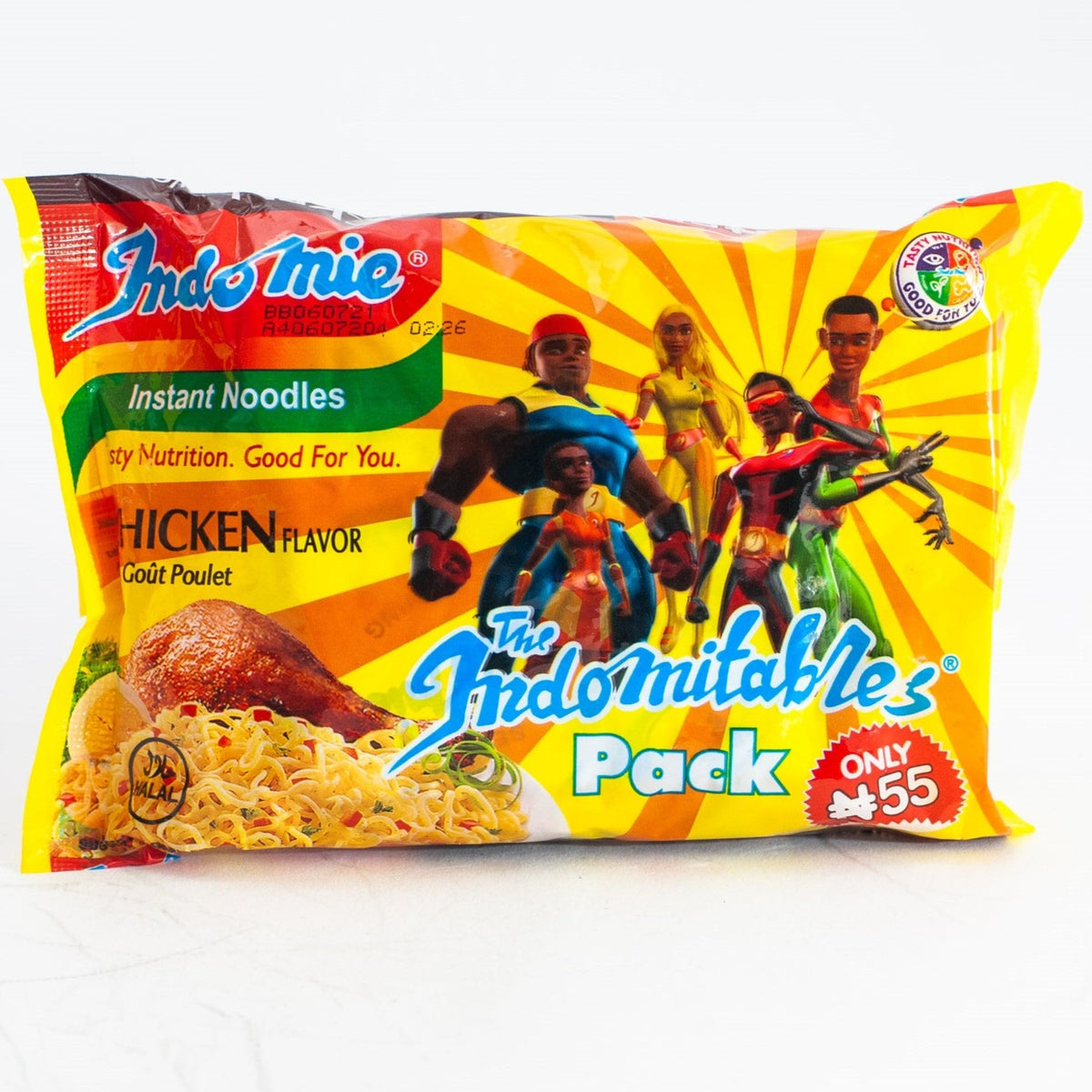
Indomie straight from the packet already has broad appeal on its own, but it's also one of the easiest instant foods to build on — a few West African pantry staples turn a basic pack into something with a lot more depth.
Start with the Base
Our Indomie instant noodles cook the same basic way regardless of what you add — boiled briefly in water with the seasoning packet, then finished however you like.
Add a Second Seasoning Layer
The included seasoning packet is a fine starting point, but stacking in an additional West African seasoning deepens the flavor beyond the packet alone. A dissolved bouillon cube, like Doli seasoning cubes, or a spoonful of an all-purpose blend like Egye Aware — see our full Egye Aware guide — both add a savory depth the packet alone doesn't reach.
Bring the Heat
If you want the noodles spicier than the seasoning packet delivers on its own, stirring in West African hot pepper sauce at the end lets you control the heat level precisely, rather than relying entirely on a spicy variant of the noodle itself.
Add Protein and Vegetables
Cracking an egg into the noodles while they cook, or stirring in leftover cooked chicken, fish, or shrimp, turns a light snack into something closer to a full meal. Adding a handful of quickly wilted greens or chopped onion and tomato rounds it out further without much extra cooking time.
Building a Full Pantry Flavor Stack
A useful mental model: seasoning cube for savory depth, spice blend for aromatic complexity, and pepper sauce for heat — the same three-part approach covered in our West African bouillon guide for building flavor into any quick dish, not just noodles specifically.
Turning It Into a Fuller Meal
Beyond individual add-ins, combining several upgrades at once — an egg, a second seasoning, and a vegetable or two — turns a light instant-noodle snack into something closer to a proper one-bowl meal, without much additional cooking time compared to the base recipe. This layered approach is a common way instant noodles get "stretched" into a more substantial dish in households across many cultures, not just West African ones.
Keeping a Flavor-Boosting Pantry Stocked
If you eat instant noodles regularly, keeping a bouillon cube, a spice blend, and a pepper sauce on hand specifically for this purpose means the upgrade is always just as fast as making the plain version — the extra flavor doesn't cost you any real time once the ingredients are already in your pantry.
Experimenting Without Overcomplicating It
The whole point of instant noodles is speed and convenience, so it's worth keeping any upgrade simple enough that it doesn't undermine that — one or two additions at a time is usually enough to notice a real difference, rather than trying to stack every possible ingredient into a single bowl. Once you've found a combination you like, it's easy to repeat the same upgrade every time rather than reinventing it from scratch each meal, making it a reliable go-to rather than a one-off experiment you have to remember from scratch each time.
Timing Matters
Add seasoning cubes and spice blends early, while the noodles are still cooking, so they have time to dissolve and distribute evenly. Save the pepper sauce for the very end, after cooking, so you can taste and adjust the heat level precisely rather than guessing upfront.
Frequently Asked Questions
Can you add extra seasoning to Indomie noodles?
Yes — adding a dissolved bouillon cube or an all-purpose spice blend on top of the included seasoning packet deepens the flavor noticeably.
How do you make Indomie spicier?
Stir in a West African hot pepper sauce at the end of cooking, which lets you control the heat level more precisely than relying only on a spicy noodle variant.
Can you add protein to instant noodles?
Yes — cracking an egg into the noodles while cooking, or stirring in leftover cooked chicken, fish, or shrimp, turns a light snack into a fuller meal.
When should you add pepper sauce to noodles?
Add it at the very end, after cooking, so you can taste and adjust the heat level precisely rather than guessing beforehand.


