
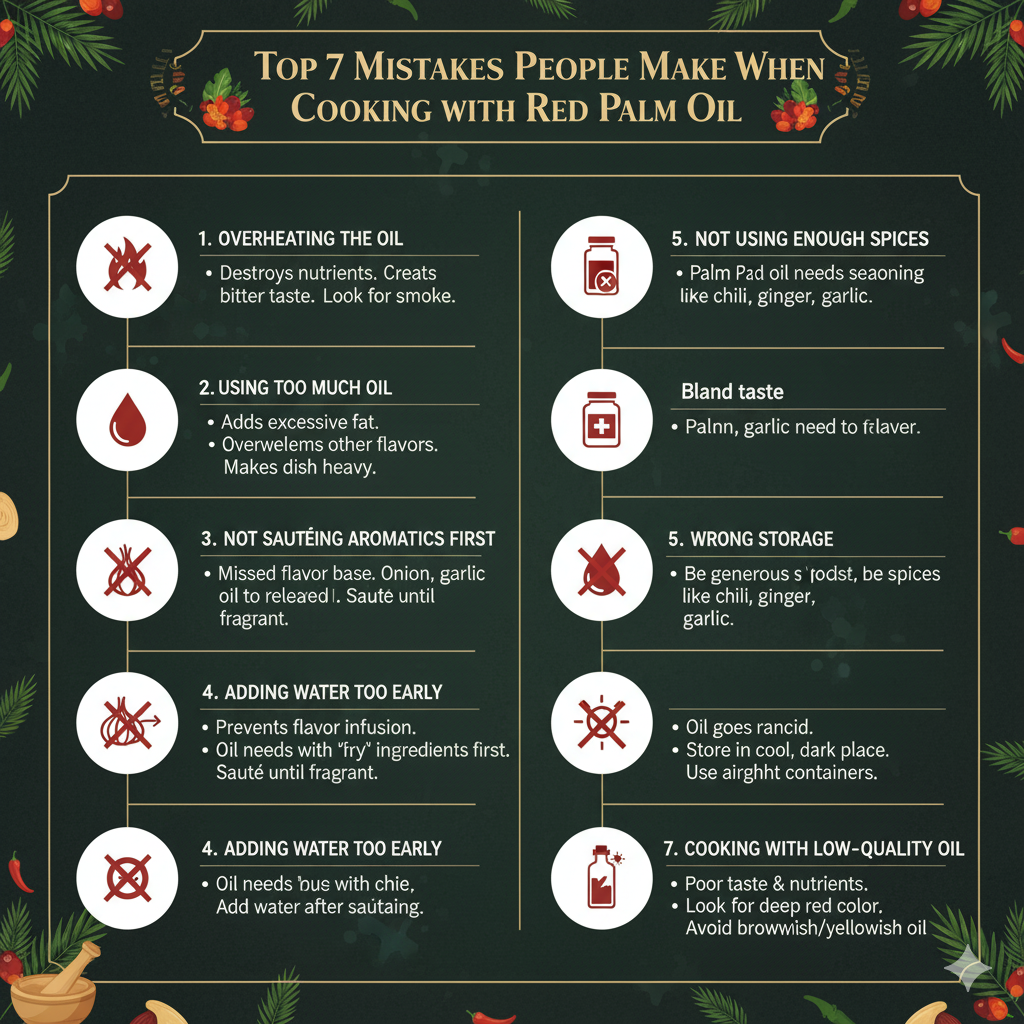
Top 7 Mistakes People Make When Cooking with Red Palm Oil
Red palm oil brings bold flavor, rich color, and authentic taste to African dishes, but only when used correctly. Many home cooks unknowingly make mistakes that cause the oil to burn, lose flavor, or change the texture of the food. This guide reveals the top mistakes people make when cooking with red palm oil and how to fix each one so your soups, stews, and sauces come out perfect every time.
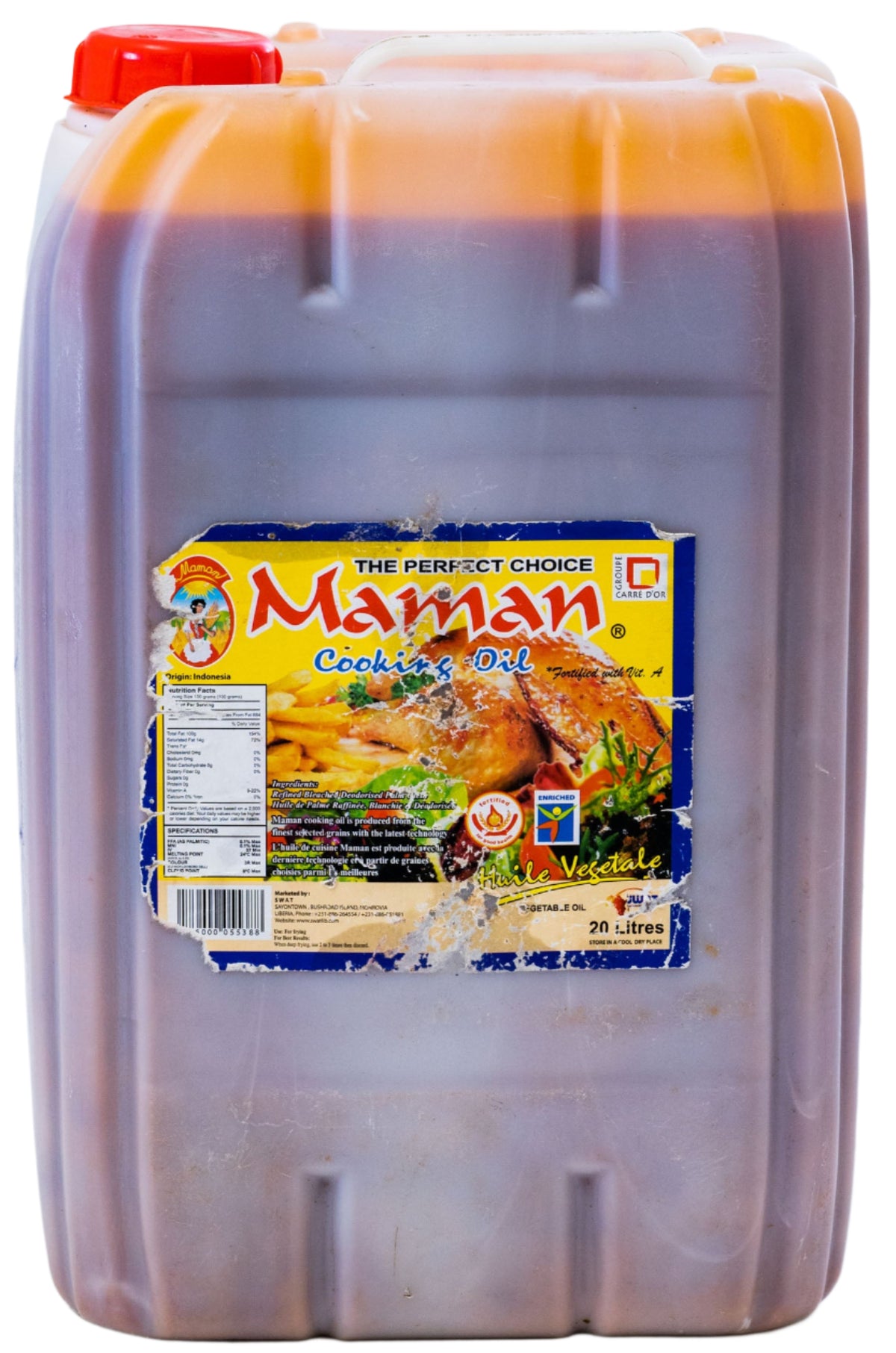 |
Maman Red Palm Oil 20 Liters Buy Now |
 |
Banga Red Palm Oil 4L Buy Now |
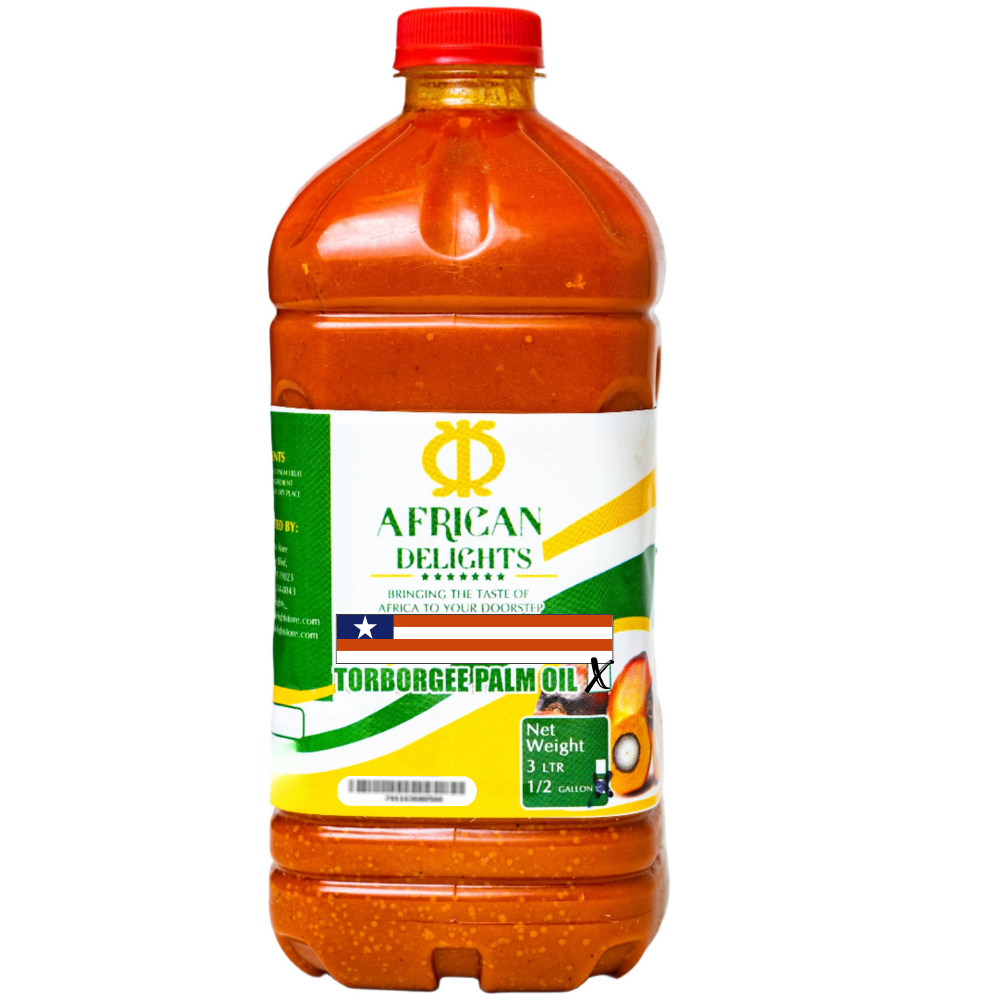 |
African Delights Torborgee Palm Oil Buy Now |
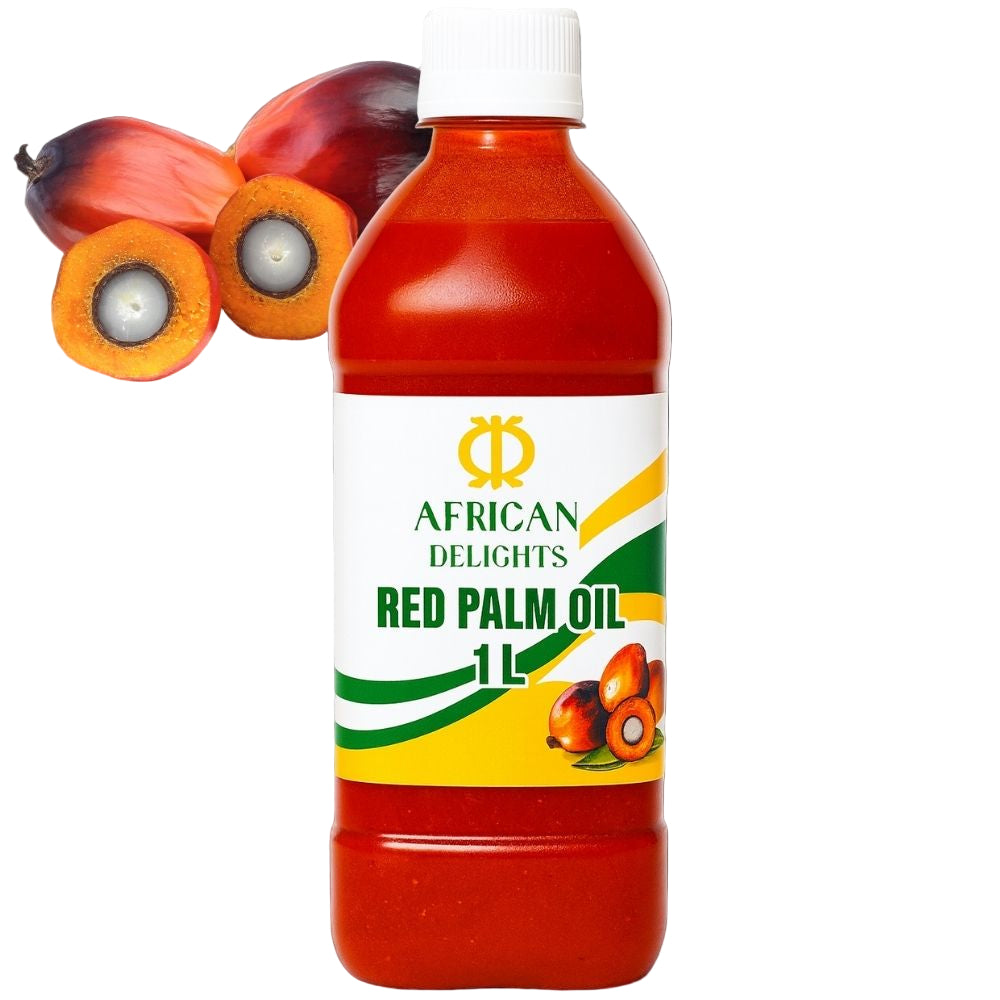 |
African Delights Red Palm Oil Buy Now |
1. Heating Red Palm Oil on High Heat
Red oil can burn quickly if heated too high. When burned, it becomes dark, bitter, and loses its rich flavor.
Fix: Heat the oil gently on medium heat until it melts and becomes smooth.
2. Frying Everything Directly in Palm Oil
Palm oil is best for soups and stews, not deep frying. Using too much heat or cooking crispy foods can reduce its nutritional value.
Fix: Use palm oil for flavor bases, sautés, and stews. Use neutral oils for deep frying.
3. Not Melting the Oil Properly
When cold, red palm oil solidifies and looks grainy. Many people cook with it before fully melting, creating uneven texture in their dish.
Fix: Melt the oil gently until fully smooth before adding ingredients.
4. Adding Palm Oil Too Early
Adding red oil at the start of cooking can dull its color and aroma.
Fix: Add the oil after the main base ingredients have cooked to preserve flavor.
5. Using Old or Low Quality Palm Oil
Expired or poorly stored oil can smell sour or taste bitter, ruining an entire pot of soup.
Fix: Choose fresh, high quality, all natural oils stored in airtight containers.
6. Mixing Palm Oil With Too Many Other Oils
Mixing reduces the signature flavor and can affect the color of African dishes.
Fix: Use pure red palm oil as the primary oil when cooking traditional recipes.
7. Overloading the Dish With Too Much Oil
Because the flavor is strong, adding too much palm oil can overpower other ingredients.
Fix: Start with a small amount and increase gradually based on taste.
Related article: The Ultimate Guide to Red Palm Oil for African Cooking (Benefits, Uses & Culture)

Frequently Asked Questions
Why does red palm oil burn so fast?
It has a low smoke point, so high heat causes burning and bitterness.
Can I fry meat in palm oil?
You can, but use medium heat. High heat frying will burn the oil.
What does bad palm oil smell like?
Sour, sharp, or fermented odors indicate the oil has expired or was stored poorly.
Why does palm oil turn grainy?
It naturally solidifies in cooler temperatures. Warm it gently to restore smoothness.
Can mixing oils change the flavor?
Yes. Mixing with vegetable oil can weaken the red oil’s authentic aroma.
Related article: Red Palm Oil vs Vegetable Oil: Which Is Better for African Cooking?
Conclusion
Cooking with red palm oil is easy once you understand how it behaves in heat and how to preserve its natural aroma and color. Avoid these common mistakes and you will enjoy bold, authentic African flavors every time.
Related article: How to Choose High-Quality Red Palm Oil (Color, Smell & Purity Guide)


11 comments
Alice Alisa
HOW I GOT CURED FROM HERPES VIRUS
I was diagnosed of HERPES virus and i have tried all I can to get cured but all to no avail,, until I saw a post in a health forum about a herbalist man who prepare herbal medications to cure all kind of diseases including HERPES virus,at first I doubted if it was real but decided to give it a try,when I contacted this herbalist via his email and he prepared a HERPES herbal cure and sent it to me via UPS courier courier service, when I received this herbal medicine, he gave me step by direction on how to apply it,after applying the way I was instructed, I was totally cured of this deadly disease called HERPES, all thanks to Dr Egbe this great herbal doctor via WhatsApp him Via: +2349150123991 email via (dr.egbeharbalhome@gmail.com)
HE CAN ALSO CURE SICKNESS LIKE
{1}HIV/AIDS
{2}DIABETES
{3}EPILEPSY
{4} BLOOD CANCER
{5} HPV
{6} ALS
{7} HEPATITIS
{8}LOVE SPELL
{9} SICKLE AND ANAEMIA.
Richard B Lambert
I want to thank Dr Ahonsie for curing me from HSV-2 with his herbal medication. All the symptoms of herpes are completely gone from my body and it’s been over 3yrs now since i got cured from herpes with Dr Ahonsie herbal medicine and my result still shows Negative and my doctor confirmed with me that I am totally cleared from herpes. I just want to let you all know that Dr Ahonsie herbs cures herpes completely from the body and you can contact him for the cure if you are suffering from HIV/AIDS, HERPES-1 & 2, HPV, DIABETES AND CANCER. You can contact Dr Ahonsie on his to get the herbal product and get rid of the virus away from your body. Dr Ahonsie is real and a great herbalist who can help you cure your illness. His Email: drahonsie00@gmail.com or whatsapp +2348039482367
Dennis Magriet
Get rid of all kinds of Herpes and virus infections, Diabetes, Hepatitis A B C, Menopause and HIV with Natural Roots and Herbs, i was once infected with HERPES and after using Dr UMA Herbal Medicine for couple of weeks i couldn’t trace it anymore, i even went for checkup and my test came out Negative. Get your cure today from this wonderful herbalist, Dr. UMA.
You can also reach doctor UMA on WhatsApp
+2347035619585 or Email dr.umaherbalcenter@gmail.com.
Robin Campbell
I would like to express my gratitude to Dr. Agbomian Sunday for his assistance in helping individuals achieve pregnancy and for his treatment of herpes through herbal medicine. Consequently, I decided to seek his expertise. I am pleased to share my own experience regarding how this remarkable individual assisted me in overcoming HSV 1&2 Disease, as well as aiding my sister in conceiving. Upon informing him of our concerns, he assured us that he would work on the situation with remarkable efficacy, and in a brief period, I was relieved from this challenging illness. Furthermore, my sister was able to conceive within a week after his intervention. I encourage anyone facing difficulties to reach out to this esteemed individual for assistance. You may contact him via email. at Dragbomianherbalcured77@gmail.com or call/text him +2349153314157
Jason Godgift
Hello everyone this is the opportunity for you to get cured completely from herpes virus with the good herbs of DR AGBOMIAN SUNDAY the good man you can give a try of this good herbal cure for herpes it’s really amazing i also recommended it as well contact his TIKTOK PAGES: https://www.tiktok.com/agbomianherbalmedication inbox his EMAIL: DRAGBOMIANHERBALCURED77GMAIL.COM
Marie Planta
Greatest thanks to Dr Oyagu for his herbal drugs that he prepared for me and when I start using it in just 2weeks I was completely cured and that ended my HERPES SIMPLEX 1&2 DISEASE I am so happy and grateful to Dr Oyagu . after reading about him on a testimony of Jason Cash on a blogger. I knew suddenly Dr Oyagu was the right Doctor to cure my HERPES SIMPLEX 1&2 DISEASE. I discuss with Dr Oyagu and he prepared a herbal medicine for me and when it got sent to me in South Korean. I used the herbal medicine and 2weeks and i went to check up again. after 15years of suffering from HERPES SIMPLEX 1&2 at last I am smiling once again. Dr Oyagu also has remedy to others disease like COLD SORES, HIV/AIDS, DIABETES, CANCER, HIGH BLOOD PRESSURE AND MANY MORE. I oblige everyone to contact this powerful herbalist Dr Oyagu and be free from your suffering. contact his WhatsApp line: +2348101755322 or his Email:Oyaguherbalhome@gmail.com
Robert J. Poland
Wow this is life changing experience, is like a miracle.
A friend of mine introduce me to Dr. Amos, after facing heart break because i was suffering form (Herpes Virus 2) my life was at its lowest. I was emotionally broken, battling (Herpes Virus 2) that had drained my confidence in life, my peace, and destroyed my relationship. I had tried so many things with no real change, and I had already given up hope. Dr. Amos didn’t just help me cure the Virus — she also restored me mentally, emotionally, and spiritually. Through his spiritual powers, guidance, natural remedies, and consistent support, I began to notice real changes in my body and my overall well-being. My symptoms reduced drastically, my strength returned, and for the first time in a long while, I felt like myself again. What shocked me the most was what happened next. My ex came back and started begging me to return back to him. my ex came back willingly. Peace was restored, communication was healed, and love found its way back to me. Today, I stand as living proof that hope is never lost. Dr. Amos bello didn’t just help me heal — he helped me rebuild my life. If you are struggling physically, emotionally, or relationship wise, I honestly recommend Dr Amos What she did for me still feels unbelievable.
contact Dr Amos on google Email or send he a mail as soon as possible. his WhatsApp
+2349064159687 or Email Herbalistdoctoramos@gmail.com
Thanks for reading. and God bless you🙏
https://www.facebook.com/profile.php?id=61563156249025
Sarah Holmes
Hello everyone , good day , I just want to share a review on what happened to me and my uncle last month . when i thought i have seen it all but Dr Amos let me know that there is more to life . i had Herpes Simplest Virus HSV2 and my uncle was tested HIV positive . we spent a lot trying to get cured ,until i contacted Dr Amos for a help . just within 21 days his herbal medicine cured me and my uncle , its still unbelievable to me and other member of my family .but I’m cured and my uncle is now tested HIV negative just after 21day . this is a miracle. i do not know how else i can appreciate Dr Amos for his works , other than to share my review for others to see WhatsApp
+2349064159687 or Email Herbalistdoctoramos@gmail.com
Thanks for reading. and God bless you🙏
https://www.facebook.com/profile.php?id=61563156249025
Lucy Morgan
God is Good!
I promised God that I would share my testimony on this website. I had all the signs of STD Virus but I was not too sure as to which one. I did a lot of online research and scared myself straight for a whole week before going to see the nurse. She took one look at my genital part and first said that it could just be the anatomy of my body, then she said it looked like genital warts and that I May have herpes. I was devastated. She gave me some medicine for the herpes and some cream for the warts. I was also tested for every single STD including herpes. I went home and cried searching the web for all sorts of cures for herpes and awaiting my results. I saw a post whereby Dr. Kham cured Herpes and other diseases, I copied his contacts out and added him on WhatsApp. The next day my test result was ready and I confirmed Herpes positive. I told Dr. Kham about my health problems and he assured me of a cure. He prepared his herbal medicine and sent it to me. I took it for 14 days (2 weeks). Before the completion of the 14 days in which I completed the dose, The Blisters and Warts that were on my body were cleared. I went back for a check-up and I was told I’m free from the virus. Dr. Kham cures all types of diseases and viruses with the help of his herbal medicine. You can reach Dr. Kham via his email: dr.khamcaregiver@gmail.com or WhatsApp him on +2348159922297 and You can Also Visit his website; herbalistdrkhamcaregiver.simdif.com and his Facebook page; https://www.facebook.com/drkhamherbremedies/
Lucy Morgan
God is Good!
I promised God that I would share my testimony on this website. I had all the signs of STD Virus but I was not too sure as to which one. I did a lot of online research and scared myself straight for a whole week before going to see the nurse. She took one look at my genital part and first said that it could just be the anatomy of my body, then she said it looked like genital warts and that I May have herpes. I was devastated. She gave me some medicine for the herpes and some cream for the warts. I was also tested for every single STD including herpes. I went home and cried searching the web for all sorts of cures for herpes and awaiting my results. I saw a post whereby Dr. Kham cured Herpes and other diseases, I copied his contacts out and added him on WhatsApp. The next day my test result was ready and I confirmed Herpes positive. I told Dr. Kham about my health problems and he assured me of a cure. He prepared his herbal medicine and sent it to me. I took it for 14 days (2 weeks). Before the completion of the 14 days in which I completed the dose, The Blisters and Warts that were on my body were cleared. I went back for a check-up and I was told I’m free from the virus. Dr. Kham cures all types of diseases and viruses with the help of his herbal medicine. You can reach Dr. Kham via his email: dr.khamcaregiver@gmail.com or WhatsApp him on +2348159922297 and You can Also Visit his website; herbalistdrkhamcaregiver.simdif.com and his Facebook page; https://www.facebook.com/drkhamherbremedies/
Davis Bright
How to Recover Your Crypto Investments from Scammers / Alpha Recovery Experts
Prominent blockchain analysis firm ALPHA RECOVERY EXPERTS, are renowned for its cutting-edge instruments and proficiency in monitoring cryptocurrency transactions. Alpha Recovery Experts, often utilized by scam victims , is an expert in tracking down misplaced or stolen digital assets and detecting illegal activity. Their strong forensic capabilities analyze blockchain data to recover stolen crypto and offer clients clear recovery alternatives and legal remedies. Since Alpha Recovery Experts have proven to be a professional and successful crypto recovery service, the team has gained global trust.
Contact Below;
Email; Alpharecoveryexpert@consultant.com
WhatsApp; +44(745)742-4681