
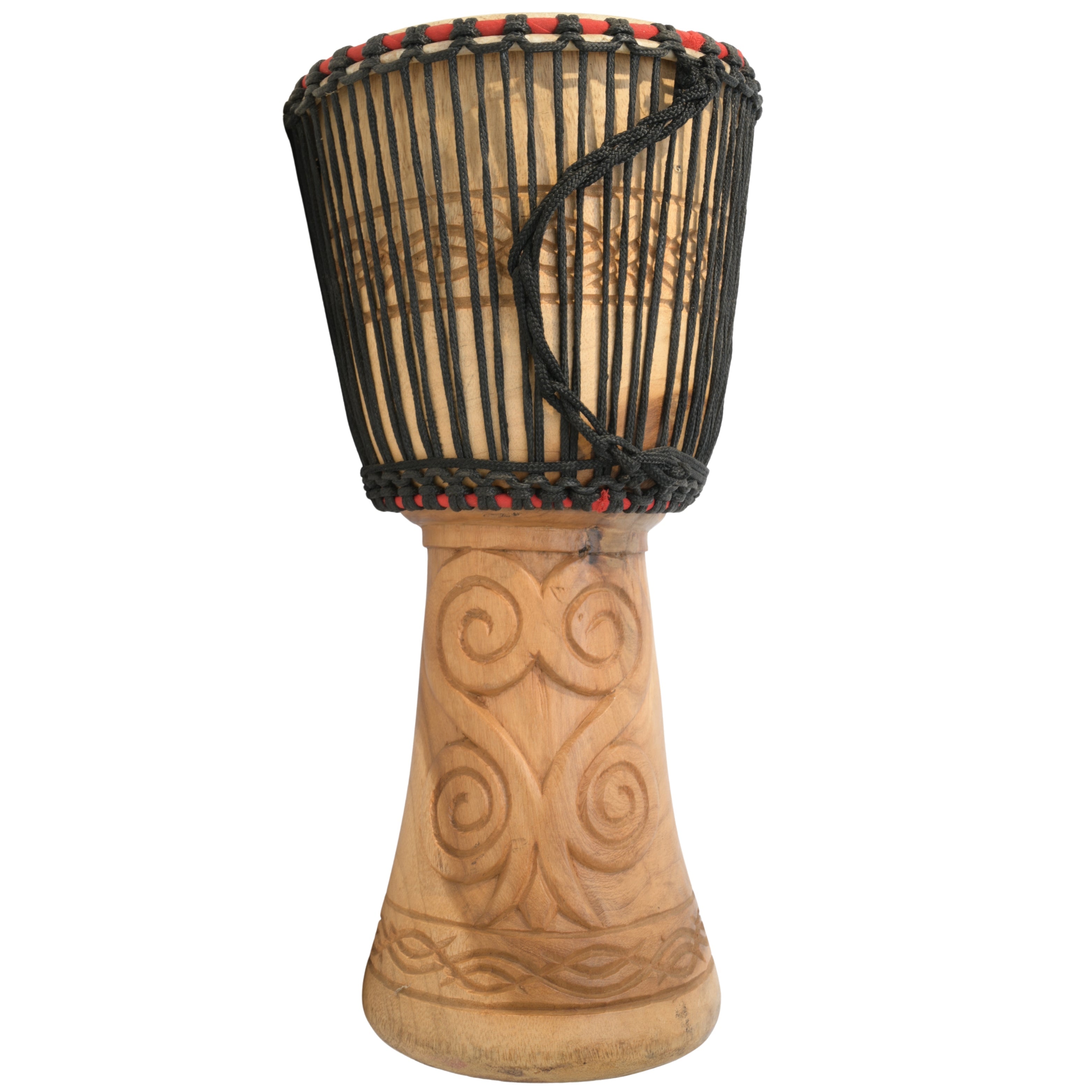
A single piece of hardwood, a handful of traditional tools, and hours of skilled labor — that's what it actually takes to make an authentic djembe. It's a craft passed down through generations of Ghanaian carvers, and the results show in every drum.
Starting From a Single Log
An authentic djembe body is carved from one solid piece of hardwood — not assembled from staves or panels like a barrel-style drum. The carver hollows the log into the djembe's signature goblet shape, working the interior to shape how sound will resonate and project once the drum is finished.
Shaping the Body
The exterior is carved and smoothed by hand, giving each drum its characteristic wide bowl, narrow waist, and flared base. Because this is entirely hand work, no two drums come out perfectly identical — the natural grain, minor curve variations, and finish all carry small differences that machine-made drums simply don't have.
Adding the Carvings
Once the body is shaped, decorative and symbolic carvings — whether an Adinkra symbol, an animal motif, or a geometric etching — are cut directly into the wood by hand. This is where a drum's individual character and meaning come from; see our introduction to Adinkra symbols for what many of these carvings represent.
Fitting the Head and Rope-Tuning
A natural goat-skin head is stretched over the top and secured with a woven rope-tuning system, the traditional method for tensioning a djembe. Rope tuning allows the drum to be tightened over time as the skin settles, and it's part of what gives a hand-made djembe its authentic look and feel compared to a mass-produced drum with mechanical hardware.
Why This Process Matters
Hand-carving from a single log, by a skilled carver, is significantly more labor-intensive than machine-manufacturing a drum from cheaper materials — but it's also what gives an authentic djembe its resonance, durability, and one-of-a-kind character. For how that difference plays out compared to mass-produced alternatives, see our guide to authentic vs. mass-produced djembes.
Frequently Asked Questions
How is a traditional djembe made?
A traditional djembe is hand-carved from a single piece of hardwood, hollowed and shaped into its signature goblet form, then fitted with a natural goat-skin head secured with woven rope tuning.
Why is each hand-carved djembe slightly different?
Because the entire shaping and carving process is done by hand, natural variations in wood grain, curve, and finish mean no two drums come out perfectly identical.
What is rope tuning?
Rope tuning is the traditional method of tensioning a djembe's head using a woven rope pattern around the body, allowing the drum to be tightened over time as needed.


