
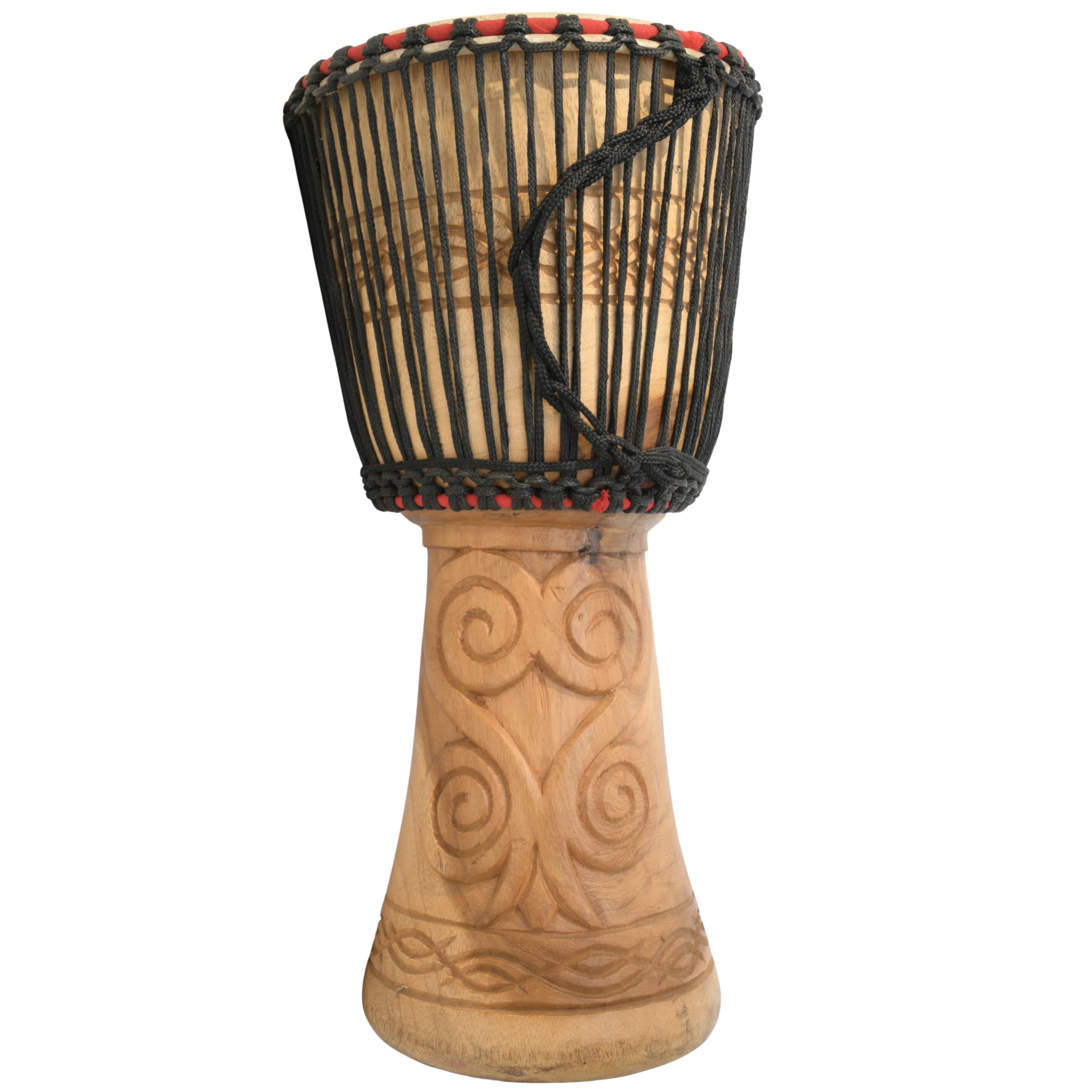
Djembe-style drums are sold everywhere now, but not all of them are built the same way. There's a real, meaningful difference between an authentic hand-carved djembe and the mass-produced plastic-shell versions that have flooded the market — and it shows up in sound, durability, and how the drum feels to actually play.
Solid Hardwood vs. Molded Plastic
An authentic djembe, like our large djembe, is carved from a single piece of solid hardwood. That dense, natural material resonates differently than injection-molded plastic — wood carries and shapes sound in a way plastic simply can't replicate, giving a hand-carved drum a warmer, deeper, more complex tone.
Real Goat Skin vs. Synthetic Heads
A natural goat-skin head responds to touch, humidity, and temperature in a living way — it can be tuned, it develops character over time, and it produces the sharp, cutting slap tone that's part of what makes a djembe sound like a djembe. Synthetic or printed-pattern "skin" heads used on many mass-produced drums are more uniform and often cheaper to make, but they don't offer the same tonal range or feel under the hand.
Hand-Carved vs. Machine-Molded Construction
Mass-produced plastic-shell djembes are typically molded in a factory, identical unit after identical unit. An authentic djembe is shaped by a carver, one piece of wood at a time — meaning every drum carries small, natural variations that also come with real skill and time invested, rather than an assembly-line process.
Durability Over Time
Solid hardwood and properly tensioned natural skin heads are built to last with basic care, and a rope-tuned drum can be re-tightened as the skin settles over the years. Plastic shells and synthetic heads are typically not designed to be maintained the same way, and tend to degrade rather than age well.
What You're Actually Paying For
An authentic hand-carved djembe costs more than a mass-produced plastic one for a real reason — the material, the labor, and the skill involved are simply not comparable. If sound quality, durability, and authenticity matter to you, the difference is worth it.
Frequently Asked Questions
Why do authentic djembes sound better than plastic ones?
Solid hardwood resonates more naturally than molded plastic, and a real goat-skin head produces a fuller tonal range — including the sharp slap tone — that synthetic heads generally can't replicate as well.
Are plastic djembes real instruments?
They can be played, but mass-produced plastic-shell drums are generally built for lower cost and consistency rather than tonal range or long-term durability, and don't offer the same authenticity as a hand-carved wood drum.
Is a hand-carved wooden djembe worth the extra cost?
For players and collectors who value sound quality, durability, and authentic craftsmanship, yes — the solid hardwood body and real goat-skin head offer meaningfully better tone and longevity than mass-produced alternatives.


