
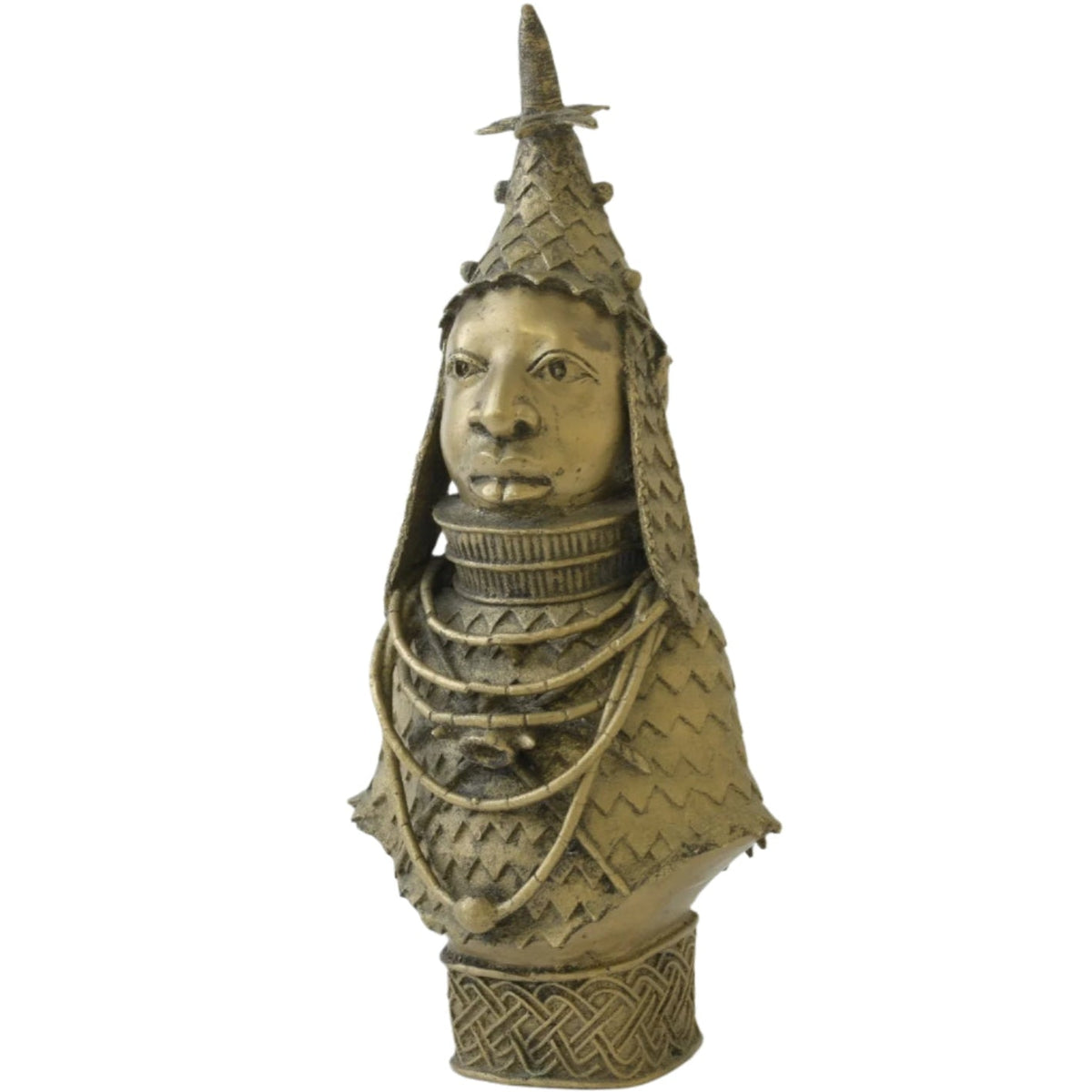
Benin bronze heads are among the most historically significant art forms to come out of West Africa — a tradition of metal casting that reached a level of technical sophistication that surprised European visitors centuries before industrial metalworking existed anywhere.
The History Behind Benin Bronzes
Benin bronzes originate from the historic Kingdom of Benin (in what is now southern Nigeria), where skilled guild artisans cast bronze and brass sculptures — including commemorative heads, plaques, and figures — for the royal court using the lost-wax casting technique, a method that produces highly detailed, precise results. This tradition dates back centuries and represents one of the most technically advanced pre-industrial metalworking traditions in the world.
What the Heads Traditionally Represented
Commemorative bronze heads were traditionally created to honor the memory of a deceased Oba (king), placed on royal ancestral altars as part of ceremonial and spiritual practice, rather than made as purely decorative art in the way they're often collected today. Understanding that original ceremonial context adds meaning beyond just the visual craftsmanship.
Reproduction Pieces vs. Historic Originals
The pieces widely available for purchase today, including our Benin bronze head, are decorative reproductions inspired by this historic tradition, made using the same general bronze-casting aesthetic — not the original historic artifacts, many of which are held in museum collections outside Nigeria, an ongoing subject of restitution discussions. A reproduction piece lets you display the artistic tradition and its craftsmanship without engaging that separate historical/legal question.
Displaying a Bronze Head at Home
Bronze pieces work well as a focal point on a mantel, console table, or dedicated display shelf, ideally with enough surrounding space that the piece isn't crowded by other objects. Because bronze has real weight and presence, it doesn't need to be paired with much else to read as a statement piece.
Pairing with Other African Art
A bronze head pairs well with other traditional African art forms for a broader cultural display — a carved wall mask nearby, or a carved beaded statue as a complementary piece with a different material and texture. Our wall mask display guide covers height and grouping principles that apply here too.
The Craft Technique Behind Them
The lost-wax casting method used to create Benin bronzes involves sculpting an original model in wax, encasing it in clay, then melting out the wax and pouring molten bronze into the resulting cavity — a technique that allows for remarkably fine detail but destroys the original wax model in the process, meaning each cast piece required its own dedicated modeling work rather than reusing a mold repeatedly.
Why This Tradition Still Resonates
Benin bronzes remain one of the most cited examples of pre-colonial African technical and artistic achievement, frequently referenced in conversations about African art history and cultural heritage more broadly. Owning a reproduction piece is one accessible way to engage with that history and appreciate the craft tradition, separate from the more complex legal and ethical questions surrounding the original historic artifacts specifically. Many collectors of African art specifically seek out a reproduction bronze head as a starting piece precisely because of this historical and cultural weight.
Care and Maintenance
Dust bronze pieces regularly with a soft, dry cloth, and avoid harsh metal polishes unless specifically appropriate for the piece's finish, since some reproduction pieces use a patina finish that aggressive polishing can strip away. Keep bronze pieces away from high humidity, which can accelerate tarnishing over time.
Frequently Asked Questions
What are Benin bronze heads?
They're a historic West African art form from the Kingdom of Benin, traditionally cast bronze or brass sculptures created to commemorate deceased kings (Obas) for royal ancestral altars.
Are the bronze heads sold today original artifacts?
No — pieces available for purchase today are decorative reproductions inspired by the tradition, not the original historic artifacts, many of which are held in museum collections and are part of ongoing restitution discussions.
How should a bronze head be displayed?
Display it as a focal point on a mantel, console table, or dedicated shelf with enough surrounding space that it isn't crowded by other objects.
How do you care for a bronze piece?
Dust it regularly with a soft, dry cloth, avoid harsh metal polishes that could strip a patina finish, and keep it away from high humidity to slow tarnishing.


