
African wall masks are some of the most striking pieces of home décor you can buy — but with dozens of regional styles and carving traditions out there, picking one (and displaying it well) takes a little more thought than grabbing whatever looks good on a shelf.
Understanding Mask Styles
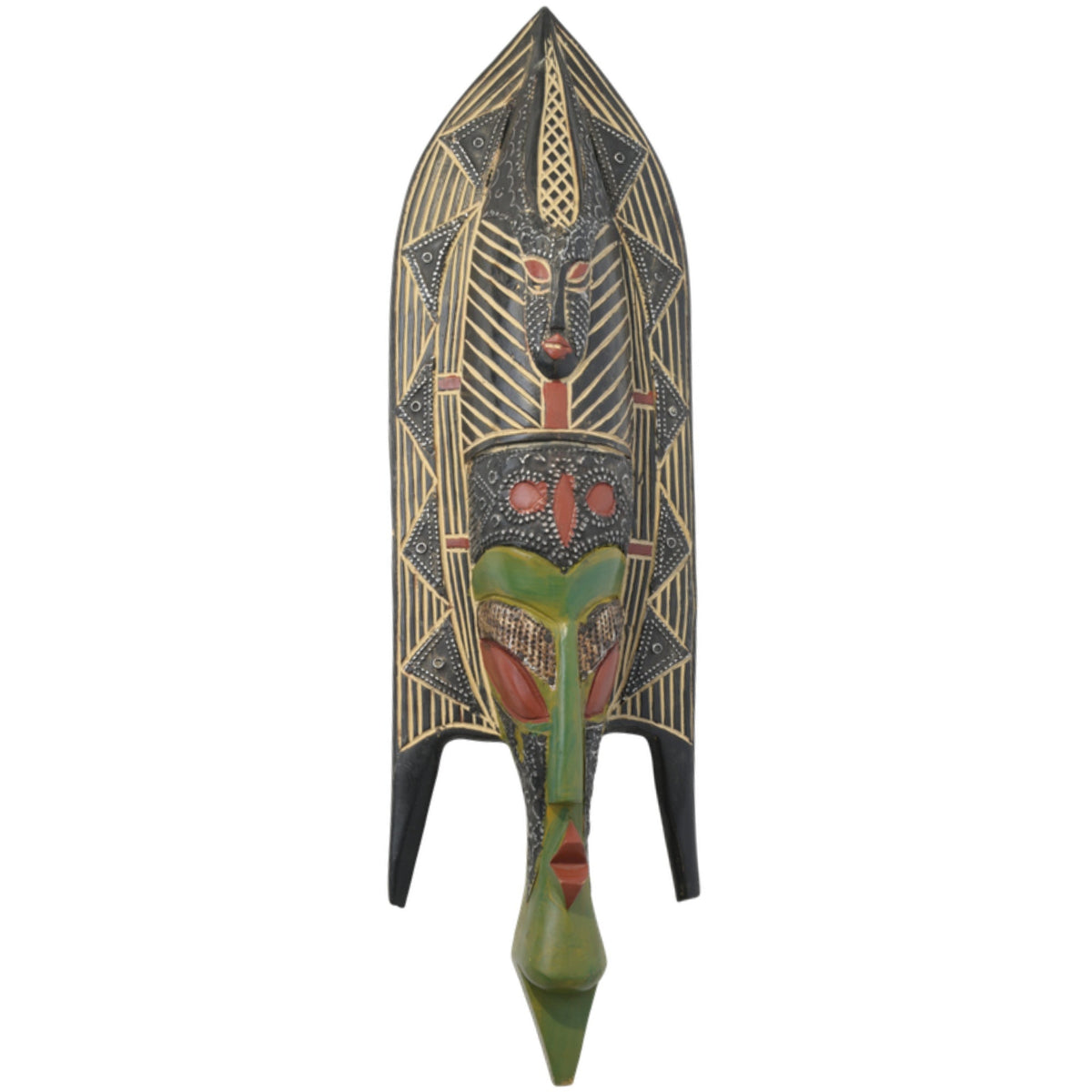
African masks vary widely by region and cultural tradition, each with distinct carving styles, proportions, and surface treatments. Our Bwa plank mask reflects the tall, flat, geometrically patterned style associated with the Bwa people of Burkina Faso, while our Kpelie wall art mask reflects a different regional tradition with its own distinct facial proportions and symbolism. Knowing that these styles come from different traditions (rather than being interchangeable "African mask" designs) helps you choose one that actually resonates with you.
Choosing a Mask for Your Space
Consider scale first — a large plank-style mask makes a strong statement piece on its own, while a smaller mask works well as part of a grouped display. Also consider tone: some masks have a formal, ceremonial presence, while others (like patterned sun masks) feel more playful and decorative.
Wall Height and Placement
Hang a single statement mask at roughly eye level for the room's primary viewing angle, which is generally 57–60 inches to the center of the piece for a typical living or dining space. For a grouped arrangement of multiple smaller masks or carvings, like our hand-carved wood wall masks, keep consistent spacing between pieces so the group reads as one composition rather than a scattered collection.
Mounting and Hanging
Most carved wood masks come with a built-in hanging mechanism on the back, but check the specific weight and hardware before mounting — heavier plank-style masks may need a wall anchor rather than a simple nail, especially on drywall.
Pairing with Other African Art
Wall masks pair naturally with other traditional African art and craft pieces — a carved African beaded statue as a floor or shelf accent, or a piece of mud cloth as a textile backdrop, both complement a mask display without competing with it for attention. Our guide to hand-carved djembe drum craftsmanship covers a related West African carving tradition if you're building out a broader cultural display.
Lighting a Mask Display
Carved wood masks read very differently under different lighting — a warm, angled light source (rather than flat overhead lighting) brings out the depth of the carving's texture and shadow detail far more effectively, similar to how gallery lighting is used to highlight sculpture. A small picture light or an adjustable spotlight aimed at an angle across the mask's surface, rather than straight on, generally produces the most dramatic, gallery-like effect.
Buying Considerations Beyond Style
Beyond choosing a style you're drawn to visually, consider the wall space and weight limits of your mounting surface, especially for larger plank-style pieces — a heavier carved mask needs a wall anchor rated for its actual weight, not just a decorative nail, to hang safely and stay level over time.
Caring for a Carved Mask
Dust wood masks regularly with a soft, dry cloth, and keep them out of direct sunlight and high-humidity areas (like a bathroom), which can cause the wood to crack, warp, or fade over time. Avoid harsh cleaning chemicals, which can strip any natural finish on the wood.
Starting a Collection
If you're building a collection rather than buying a single piece, starting with masks from a couple of distinct regional traditions (rather than several similar pieces) generally produces a more visually interesting display and gives you a broader introduction to the range of African carving styles, instead of a set of near-duplicates.
Frequently Asked Questions
How high should an African wall mask be hung?
Hang a single statement mask at roughly eye level, generally 57–60 inches to the center of the piece for a typical room.
Do different African mask styles come from different regions?
Yes — mask styles like Bwa plank masks and Kpelie masks come from distinct regional and cultural carving traditions, each with its own proportions and symbolism.
What should I avoid when displaying a wood mask?
Avoid direct sunlight and high-humidity areas, which can cause the wood to crack, warp, or fade, and avoid harsh cleaning chemicals that can strip the finish.
Can African masks be grouped together in a display?
Yes — grouping several smaller masks or carvings with consistent spacing creates a cohesive display, rather than needing a single large statement piece.


