
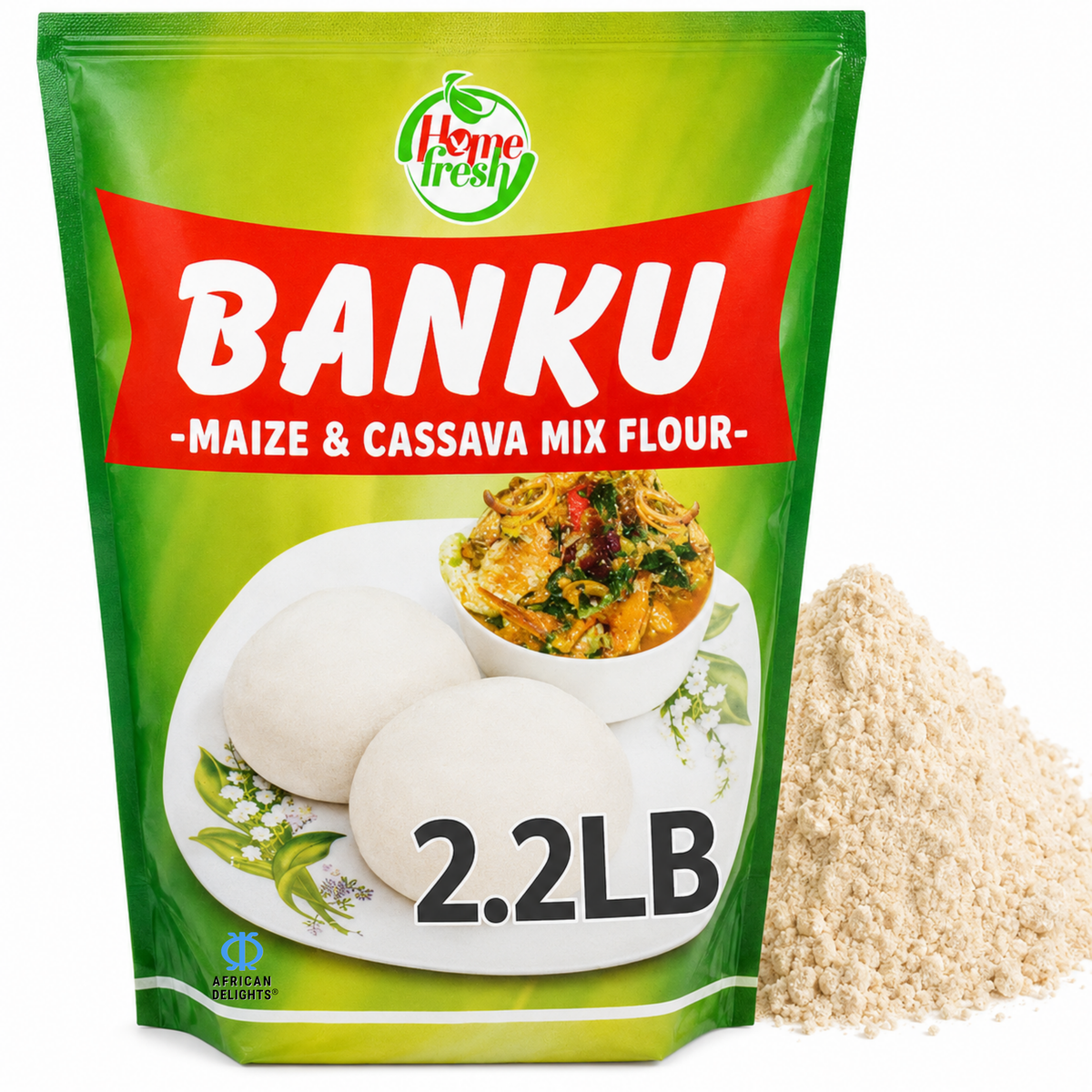
Banku mix flour has made the traditional two-day fermentation process optional — but not every pre-mixed banku flour behaves exactly the same once it hits the pot, and the brand you pick can make a real difference in the finished texture.
What Both Brands Have in Common
Both HomeFresh Banku maize and cassava mix flour and Jas Banku mix flour are pre-blended maize-and-cassava flours designed to shortcut the traditional fermentation process, letting you cook banku by simply combining the flour with hot water rather than fermenting corn dough from scratch.
Texture Differences
Because the two brands use slightly different maize-to-cassava ratios and processing methods, the finished banku can come out with subtly different textures — some cooks find one brand produces a smoother, more elastic result, while the other comes out slightly firmer or grainier. Trying both side by side is really the only reliable way to know which texture you personally prefer, since the difference is subtle enough that packaging alone won't tell you.
Preparation Method
Both mixes are prepared the same basic way: gradually whisk the flour into boiling water while stirring continuously to avoid lumps, then continue stirring and folding vigorously (traditionally with a wooden banku stick) as the mixture thickens into a smooth, stretchy dough. Our handy pestle banku stick is built specifically for this stirring and folding motion, which is harder to replicate well with a standard spoon.
A Millet-Based Alternative
If you want to try a different grain base entirely, HomeFresh millet banku flour swaps the maize base for millet, producing a noticeably different flavor and texture from either of the maize-and-cassava versions — worth trying if you want variety beyond the standard banku profile.
Which One to Choose
If you're new to making banku at home, either HomeFresh or Jas is a reasonable starting point — both are widely used, reliable options. If you've made banku before and have a texture preference (smoother vs. firmer), that's the more useful deciding factor than brand reputation alone.
Why Pre-Mixed Banku Flour Exists
Traditional banku is made by fermenting fresh corn dough over one to two days before cooking — a process that requires planning ahead and isn't always practical for a quick weeknight meal. Pre-mixed banku flours shortcut that fermentation step, trading some of the traditional tang for genuine convenience, which is exactly why they've become a pantry staple for many households rather than a lesser substitute.
Getting the Consistency Right
Whichever brand you use, the biggest technique factor in good banku is the stirring itself — adding the flour gradually rather than all at once, and stirring continuously and vigorously as it thickens, prevents the lumps that a rushed preparation tends to produce. This technique matters as much as, or more than, which specific brand of flour you're using.
Adjusting Consistency to Preference
Both brands' finished texture can be adjusted somewhat by tweaking the water ratio slightly from package instructions — a bit less water produces a firmer result, a bit more produces something softer — so if your first attempt with either brand doesn't match your ideal texture, a small ratio adjustment next time is often the fix rather than needing to switch brands entirely.
Serving Banku
However you prepare it, banku is traditionally served with a soup or stew and, often, grilled or fried fish or meat on the side — see our full fufu and banku stick guide for more on the tools and technique, and our fermented Ghanaian foods guide for how banku fits alongside kenkey, gari, and attieke.
Frequently Asked Questions
What's the difference between HomeFresh and Jas banku mix?
Both are pre-blended maize-and-cassava flours, but slightly different ratios and processing can produce subtly different textures — one may come out smoother, the other slightly firmer.
How do you prepare banku mix flour?
Gradually whisk the flour into boiling water while stirring to avoid lumps, then continue stirring and folding vigorously (traditionally with a banku stick) as it thickens into a smooth, stretchy dough.
Is millet banku flour different from regular banku mix?
Yes — millet banku flour swaps the standard maize base for millet, producing a different flavor and texture from maize-and-cassava versions.
What is banku traditionally served with?
Banku is traditionally served with a soup or stew, often alongside grilled or fried fish or meat.


