
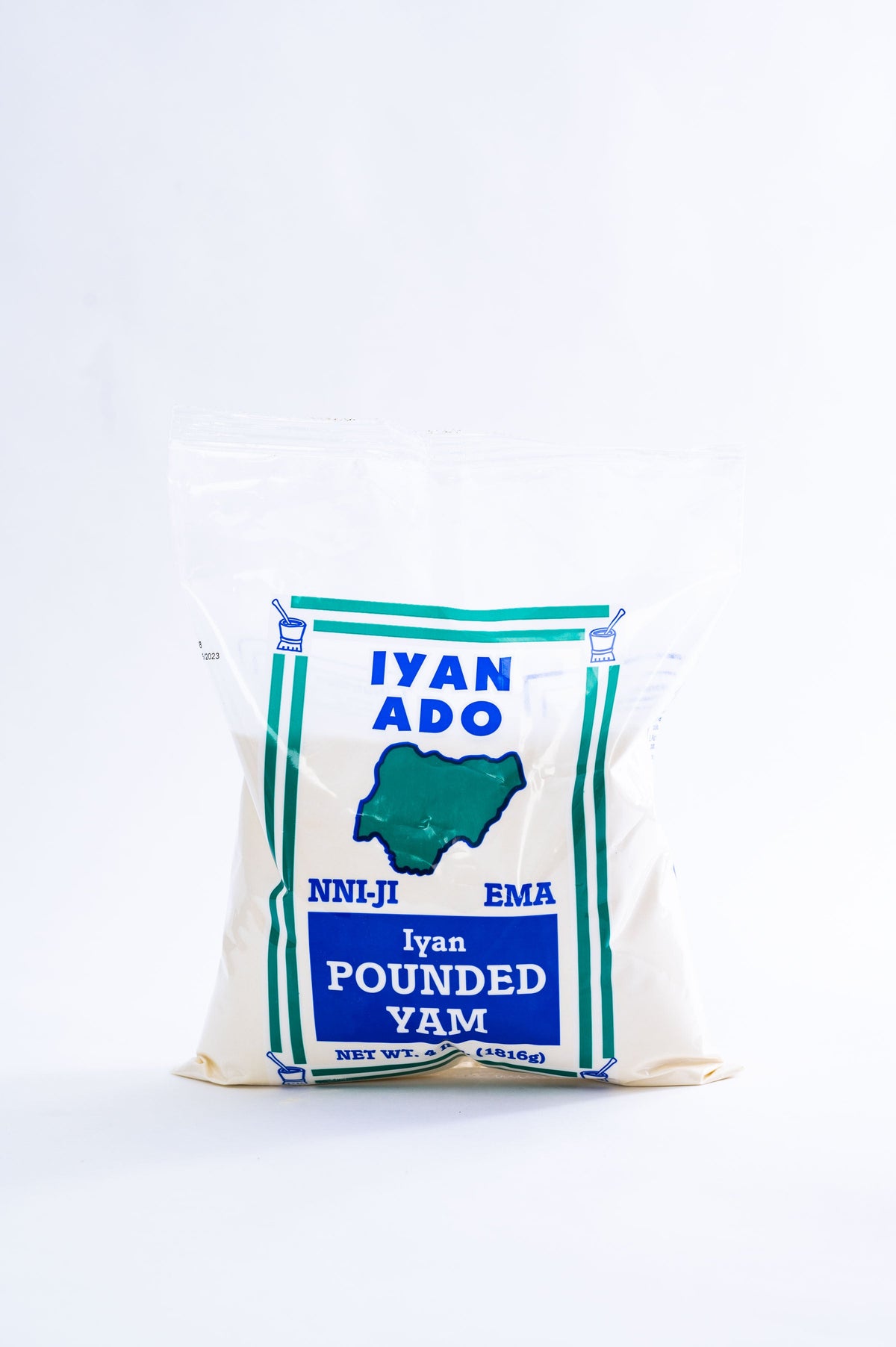
Pounded yam and fufu often get lumped together since they're both eaten the same way — pinched off in small pieces and dipped into soup rather than chewed on their own — but they're made from different base ingredients with genuinely different textures.
What Pounded Yam Is
Pounded yam is made specifically from boiled yam, traditionally pounded by hand into a smooth, elastic dough. Our Iyan Ado pounded yam flour reconstitutes with hot water into the same smooth texture without needing fresh yam or the labor of hand-pounding. Our how to cook Ghana yam guide covers preparing fresh Ghana yam itself in more detail, if you'd rather start from the whole tuber.
What Fufu Is
"Fufu" is a broader term that covers several base ingredients — cassava, plantain, cocoyam, or combinations of these — pounded or reconstituted into a similarly smooth, stretchy dough. Our plantain fufu flour and cocoyam fufu flour are both fufu variants made from a different base than pounded yam.
Texture Differences
Pounded yam tends to have a slightly firmer, denser bite compared to cassava-based fufu, which is often described as stretchier and more elastic. Plantain and cocoyam fufu each bring their own subtle flavor notes and slightly different textures from the more neutral cassava base — worth trying a few to find your preference.
Flavor Differences
Pounded yam has a mild, slightly earthy, starchy flavor from the yam itself. Fufu made from plantain carries a subtle sweetness, while cocoyam fufu has its own distinct, slightly nutty character — differences that come through even though both are typically eaten plain, without seasoning, since the flavor is meant to complement rather than compete with the soup it's served with.
How Both Are Eaten
Both pounded yam and fufu are traditionally eaten by pinching off a small piece with your fingers, shaping it slightly, and using it to scoop up soup or stew rather than chewing it as a standalone food. Neither is meant to be eaten alone the way you'd eat rice.
Preparing Either from Flour
Whether you're reconstituting pounded yam flour or a cassava/plantain/cocoyam fufu flour, the general method is similar — whisk the flour gradually into boiling water while stirring continuously to prevent lumps, then keep stirring as it thickens into a smooth, elastic dough. The exact water ratio varies by brand and flour type, so following the specific package instructions gives more consistent results than using a single universal ratio across all of them.
Serving Temperature
Both pounded yam and fufu are traditionally served warm, shaped into a smooth mound or individual portions rather than left in the pot. If it cools and firms up too much before serving, a quick reheat with a splash of water and gentle stirring can restore some of the original soft, pliable texture. Serving it too cold is the most common complaint about a reheated batch, so timing the preparation close to mealtime generally gives the best result, rather than preparing it too far ahead and letting it sit.
Which to Choose
If a specific soup or stew traditionally pairs with one or the other, that pairing usually exists for a reason — texture and flavor balance with the specific dish. Beyond a specific recipe pairing, it largely comes down to personal preference for the firmer, more neutral pounded yam versus the stretchier, more varied flavor profile of the fufu variants. See our full fufu and banku stick guide for the tools used to prepare and eat both.
Frequently Asked Questions
What's the difference between pounded yam and fufu?
Pounded yam is made specifically from boiled yam, while "fufu" is a broader term covering cassava, plantain, cocoyam, or combinations, each pounded or reconstituted into a similarly smooth dough.
Which has a firmer texture, pounded yam or fufu?
Pounded yam tends to be slightly firmer and denser, while cassava-based fufu is often described as stretchier and more elastic.
How are pounded yam and fufu eaten?
Both are traditionally eaten by pinching off a small piece with your fingers and using it to scoop up soup or stew, rather than chewed on their own.
Can pounded yam and fufu be made without fresh tubers?
Yes — pre-made flour versions of both reconstitute with hot water into a similar texture without needing to boil and pound fresh yam, cassava, plantain, or cocoyam.


