
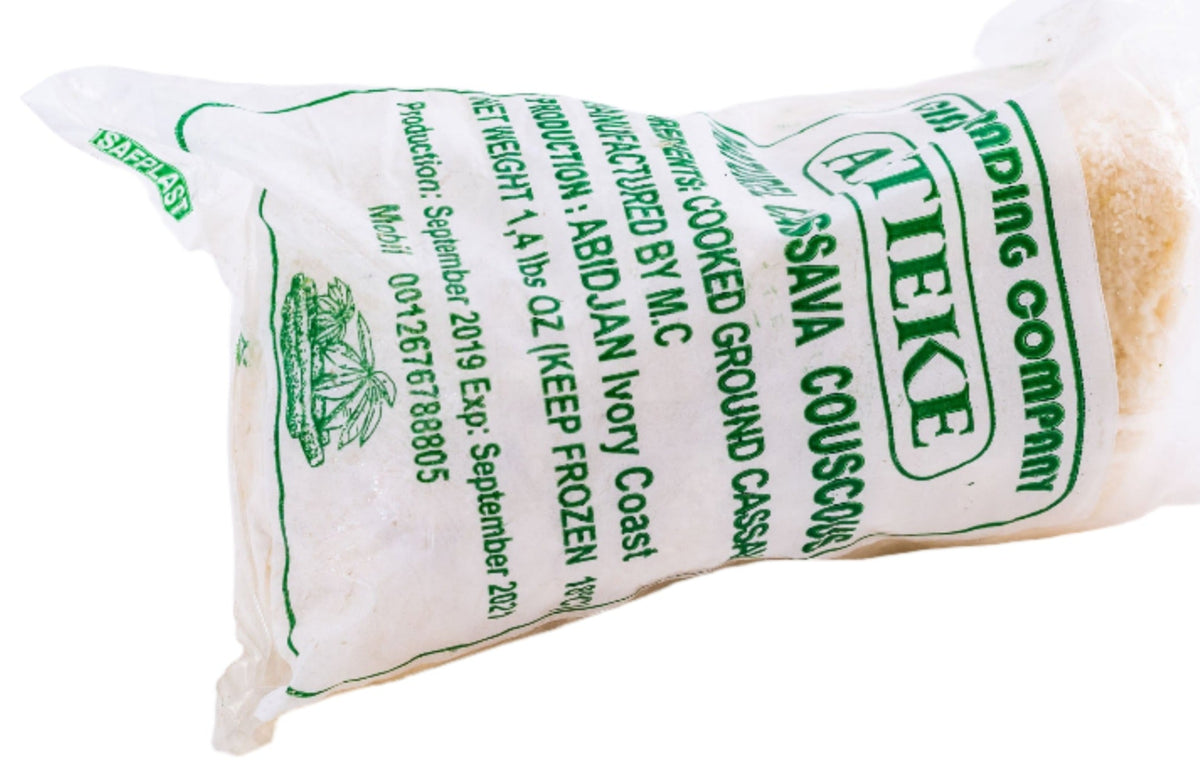
Attieke is sometimes described to newcomers as "cassava couscous," which gets the texture close enough to picture, but doesn't quite capture the fermented tang that makes it genuinely distinct from actual couscous.
What Attieke Is
Attieke is a staple food from Côte d'Ivoire made from fermented, grated cassava, giving it a light, slightly sour flavor and a fluffy, granular texture similar in appearance to couscous once steamed. Our attieke cassava couscous and Nayama natural attieke are both ready to prepare with minimal effort.
How to Prepare It
Attieke is typically pre-processed (fermented and dried) before it reaches the package, so preparation mainly involves steaming or briefly soaking it in water to rehydrate before serving — check your specific package's instructions, since exact rehydration methods vary slightly by brand. It's ready when the granules have softened into a light, fluffy texture rather than remaining hard or gritty.
What Attieke Tastes Like
The fermentation process gives attieke a mild sourness, similar in character (though not identical) to the tang found in other fermented cassava products like gari. This tang is a defining, expected part of the dish rather than a sign of spoilage.
Attieke vs. Gari
Both attieke and gari come from fermented cassava, but they're processed and served differently — gari is roasted into coarse granules and often soaked or eaten as a quick snack, while attieke is steamed and served as more of a couscous-style side dish alongside a main protein. Our gari soakings guide covers gari's quicker, snack-style preparation for comparison.
What to Serve With Attieke
Attieke is traditionally served with grilled fish, chicken, or meat, along with a spicy pepper sauce or onion-tomato relish on the side. Our West African hot pepper sauce is a straightforward way to add the traditional heat.
Where Attieke Comes From
Attieke is most strongly associated with Côte d'Ivoire, where it's considered a national dish, though it's found across West Africa in areas with cultural and trade ties to Ivorian cuisine. The full traditional production process — grating, fermenting, and drying cassava into the granular form sold in packages — is a skilled, multi-day process typically done by experienced local producers rather than at home.
Common Mistakes When Preparing Attieke
Under-steaming or under-soaking attieke leaves it gritty and hard rather than light and fluffy, while over-soaking can make it mushy and clumped. Following the specific package's timing rather than guessing is the most reliable way to get the texture right, since exact rehydration times can vary between brands and processing methods.
Reheating Leftover Attieke
Leftover attieke reheats well with a quick steam or a brief pass in the microwave with a slightly damp paper towel over it, which helps restore moisture that dry reheating (like an open microwave without added moisture) tends to strip out, leaving it drier than fresh. Fluffing it gently with a fork after reheating helps redistribute the moisture evenly rather than leaving damp and dry patches side by side, restoring a texture close to when it was first prepared, rather than leaving it clumped and dense after reheating.
Attieke at Gatherings
Attieke's neutral base makes it easy to prepare in larger batches for a group, alongside a shared platter of grilled fish or meat, since it doesn't require individual plating the way some other side dishes do.
Where Attieke Fits Among Fermented Ghanaian and West African Foods
Attieke belongs to the same broader family of fermented cassava and corn staples found across West Africa — gari, kenkey, and banku all share that fermentation step. See our full fermented Ghanaian foods guide for how they compare.
Frequently Asked Questions
What is attieke made from?
Attieke is made from fermented, grated cassava, giving it a light, slightly sour flavor and a fluffy texture similar to couscous once prepared.
How do you prepare attieke?
Most packaged attieke is pre-fermented and dried, so preparation typically involves steaming or briefly soaking it in water to rehydrate before serving — check the specific package instructions.
What's the difference between attieke and gari?
Both come from fermented cassava, but gari is roasted into coarse granules and eaten as a quick snack, while attieke is steamed and served as a couscous-style side dish.
What is attieke traditionally served with?
It's traditionally served with grilled fish, chicken, or meat, along with a spicy pepper sauce or onion-tomato relish.


