
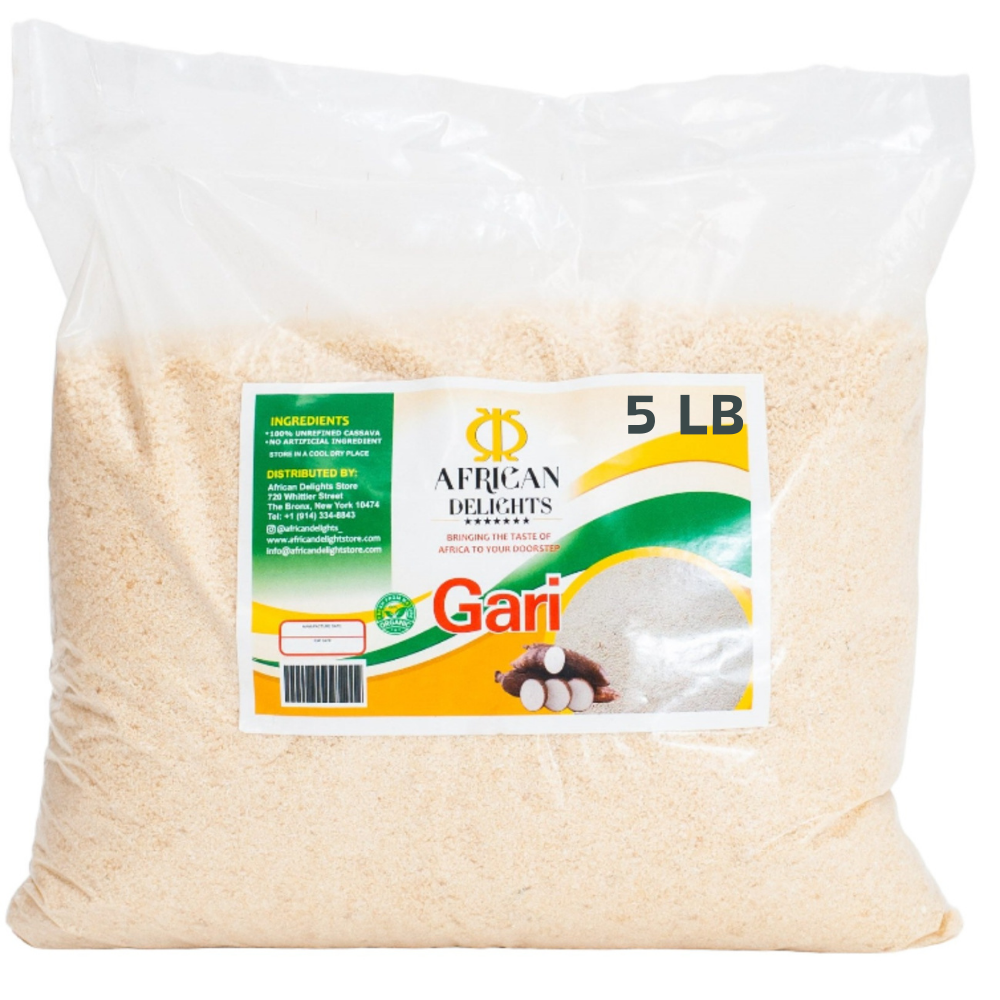
Gari soakings might be the fastest thing to make on this entire list — no stove, no cooking, just a bowl, some gari, liquid, and whatever mix-ins you want. It's the definition of a quick snack.
What Gari Soakings Is
Gari soakings (sometimes just called "soakings") is a no-cook Ghanaian snack made by soaking gari — roasted, granulated fermented cassava — directly in cold water, milk, or another liquid until it softens, then adding sugar, groundnuts, or other mix-ins. Our Ghana gari is the base ingredient, already roasted and ready to soak straight from the bag.
Basic Method
Add a portion of gari to a bowl, pour in cold water (or milk, for a richer version), and let it sit for a few minutes until the granules soften and swell slightly, absorbing the liquid. The gari should end up soft but still have some texture — not turned into a smooth paste.
Sweet vs. Savory Versions
Sweet gari soakings adds sugar or honey and often condensed or evaporated milk, like Peak evaporated milk, for a dessert-like snack. A more savory version skips the sugar and pairs the soaked gari with roasted groundnuts and sometimes coconut for a less sweet, more textural snack.
Adding Groundnuts
Roasted groundnuts are one of the most common gari soakings mix-ins, adding crunch against the softened gari's texture. Our Azur roasted peanuts work well for this — added dry, on top of the soaked gari, rather than soaked along with it.
Other Common Additions
Beyond groundnuts and sugar, common gari soakings additions include coconut flakes, dried fish (for a more savory take), or fresh fruit. It's a flexible snack format more than a fixed recipe — most households have their own preferred mix.
Adjusting Texture to Preference
The amount of liquid used and how long you let the gari sit both affect the finished texture — less liquid and a shorter soak keep more individual crunch in the granules, while more liquid and a longer soak produce a softer, more uniformly hydrated result. There's no single "correct" texture; it comes down to personal preference and what you grew up eating.
A Quick, No-Equipment Snack
Because it requires no cooking equipment at all — just a bowl and a spoon — gari soakings is a practical option for a dorm room, office, or anywhere a stove isn't available, which is part of why it's remained such a popular quick snack across generations of Ghanaians, including students and people away from a full kitchen.
A Nostalgic Snack for Many
For many who grew up in Ghana or Ghanaian households abroad, gari soakings carries real nostalgic weight as a childhood snack — simple to make, easy to customize, and often one of the first things a kid learns to prepare independently in the kitchen. Recreating it as an adult is, for many, as much about the memory as it is about the taste itself, making it a small but meaningful ritual worth passing on to the next generation of kids in the family.
Gari Soakings vs. Other Gari Preparations
Gari soakings is the quickest, no-cook way to eat gari — a much simpler preparation than gari fortor (fried gari) or using gari as a base for eba, which requires cooking with hot water into a dough. See our full fermented Ghanaian foods guide for how gari compares to other fermented cassava products like attieke.
Frequently Asked Questions
How do you make gari soakings?
Add gari to a bowl, pour in cold water or milk, and let it sit for a few minutes until it softens and swells, then add sugar, groundnuts, or other mix-ins to taste.
Is gari soakings cooked?
No — it's a no-cook preparation, made simply by soaking the gari directly in liquid rather than boiling or cooking it.
Can gari soakings be savory instead of sweet?
Yes — skipping the sugar and pairing soaked gari with roasted groundnuts and coconut instead makes for a less sweet, more textural savory version.
What's the difference between gari soakings and eba?
Gari soakings is a no-cook snack made by soaking gari in cold liquid, while eba is made by cooking gari with hot water into a dense, dough-like swallow food.


