
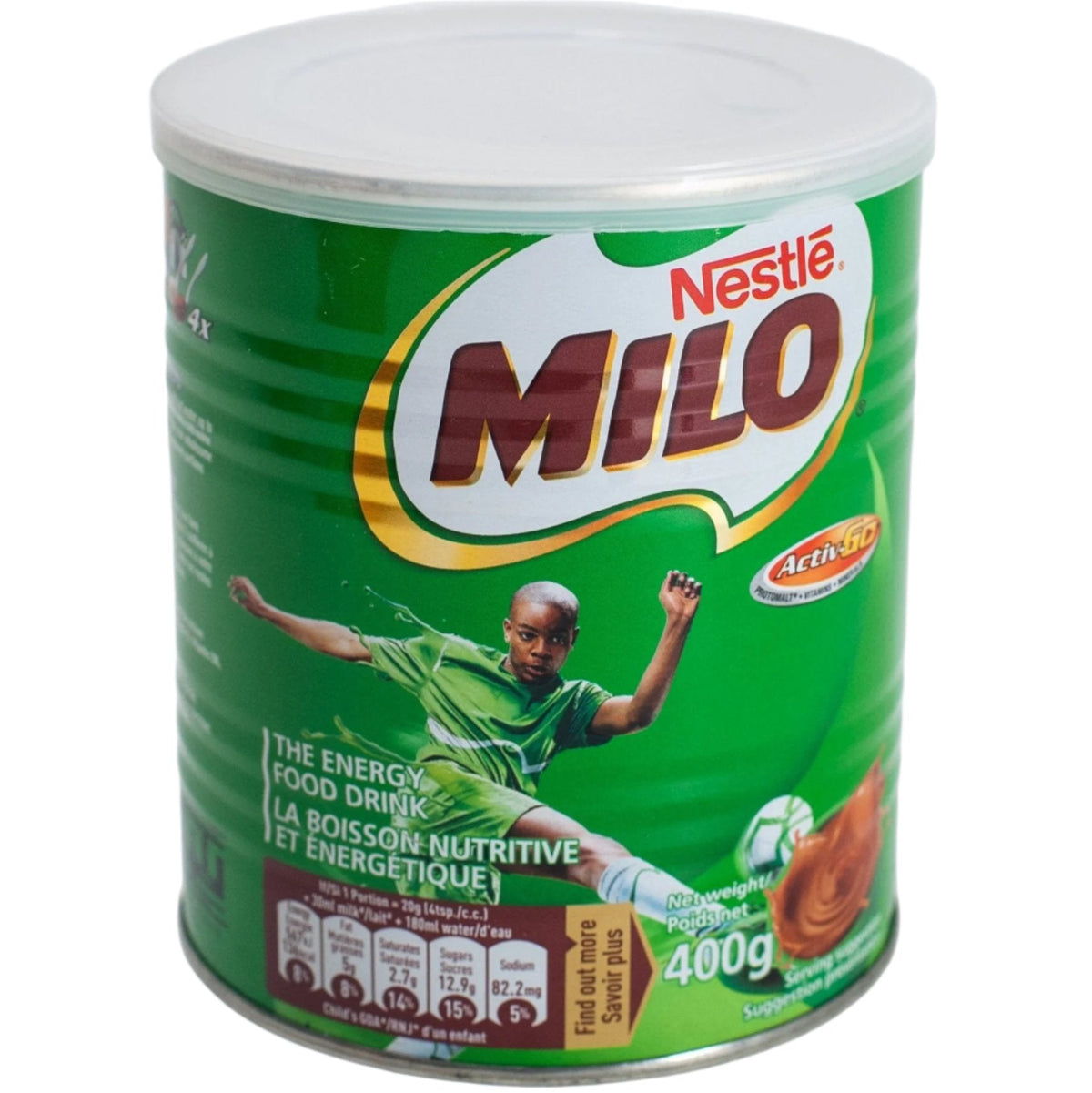
Milo, Horlicks, and drinking chocolate all get grouped together as "malt drinks" or "hot chocolate," but they're actually three distinct products with different bases, flavors, and typical uses. Here's how they compare.
Milo: Malted Chocolate, Built for Energy
Milo is a malted chocolate and milk powder drink, originally developed as a nutritional supplement and still marketed that way across Africa, Asia, and the Caribbean. It has a distinct malty-chocolate flavor, less sweet than a typical hot chocolate, and is usually mixed with hot or cold milk (or water) as a breakfast or after-school drink. Our Milo powder drink is the same formulation widely used in West African households.
Horlicks: Malted, Milky, Less Chocolatey
Horlicks is also a malted milk drink, but without the cocoa base that defines Milo — its flavor is closer to malted milk and barley than chocolate. It's traditionally marketed as a bedtime or family nutritional drink rather than an energy drink, and tends to have a lighter, sweeter, more "malted milkshake" profile than Milo's cocoa-forward taste. Our Horlicks traditional drink is the same classic formulation most households grew up with.
Drinking Chocolate: Cocoa First, No Malt
Drinking chocolate (or hot chocolate mix) is built around cocoa and sugar, without the malted-barley base that defines both Milo and Horlicks. It's sweeter and more purely chocolatey, closer to a dessert drink than a nutritional one. Our Chocoluv instant drinking chocolate mix is a straightforward cocoa-based option, best for those who want chocolate flavor without the malt taste — see our full Chocoluv drinking chocolate guide for hot, iced, and baking uses. If you'd rather build a hot chocolate from scratch, our unsweetened Ghanaian cocoa powder is the base ingredient, and browse our full dry milk and drink-mix collection for more options.
How to Choose Between Them
If you grew up drinking Milo, its distinct malty-cocoa flavor is genuinely different from a plain hot chocolate — most people who prefer Milo find drinking chocolate too sweet and one-dimensional by comparison. If you want a purely chocolatey, dessert-style hot drink, drinking chocolate is the more direct choice. Horlicks sits in between in sweetness but skips the cocoa flavor entirely, making it the odd one out for anyone specifically wanting chocolate taste.
Serving Ideas
All three are typically mixed with hot or cold milk, though water works in a pinch. Milo is also commonly sprinkled dry over ice cream or cereal in many households, and Chocoluv drinking chocolate can double as a baking ingredient for chocolate-flavored desserts, not just a drink.
How Each Is Typically Prepared
Milo is usually mixed 2–3 heaping spoonfuls into a cup of hot or cold milk, stirred until dissolved — many people prefer it made with cold milk over ice for a thicker, more indulgent drink rather than a thin hot beverage. Horlicks follows a similar method, typically stirred into warm milk before bed as part of a nighttime routine. Chocoluv drinking chocolate dissolves easily into hot milk or hot water, and because it's cocoa-based rather than malt-based, it can also be melted down slightly thicker for a dessert-style drinking chocolate rather than a thin cup of cocoa.
Where Each Is Most Popular
Milo has deep roots across West Africa, Southeast Asia, Australia, and the Caribbean, often positioned as an everyday household staple rather than an occasional treat. Horlicks has a particularly strong following in the UK and South Asia, where it's long been marketed as a bedtime drink for the whole family. Drinking chocolate, by contrast, doesn't carry the same regional identity — it's a more universal category, with brands and formulations varying widely by country and by whether it's positioned as an everyday drink or a special-occasion dessert item.
Choosing One for Your Pantry
If you already know you like the taste of Milo, sticking with it is usually the simplest choice — its flavor doesn't translate directly from any of the alternatives. If you're chocolate-focused and want something sweeter and more dessert-like, drinking chocolate is the more direct match, or go straight to the source with our Amonu Ghanaian chocolate bars and gift boxes (see our Amonu chocolate guide) if you want to eat rather than drink your chocolate. Horlicks is worth trying primarily if you specifically want a malted (not chocolate) hot milk drink, since its flavor profile is the most different of the three. For more Ghanaian sweets and snacks to pair with any of these drinks, see our Ghana snacks and candy guide.
Frequently Asked Questions
What's the main difference between Milo and drinking chocolate?
Milo is a malted chocolate drink with a distinct malty-cocoa flavor, while drinking chocolate is built purely around cocoa and sugar without any malt, giving it a sweeter, more straightforwardly chocolatey taste.
Does Horlicks taste like chocolate?
No — Horlicks is a malted milk drink without a cocoa base, so its flavor is closer to malted milk than chocolate.
Is Milo the same as hot chocolate?
Not exactly — Milo is malted and less sweet than typical hot chocolate, with a distinct malty-cocoa flavor rather than a straightforward chocolate taste.
Which is sweeter, Milo or drinking chocolate?
Drinking chocolate is generally sweeter and more dessert-like, while Milo has a more balanced, less sugary, malt-forward flavor.


