
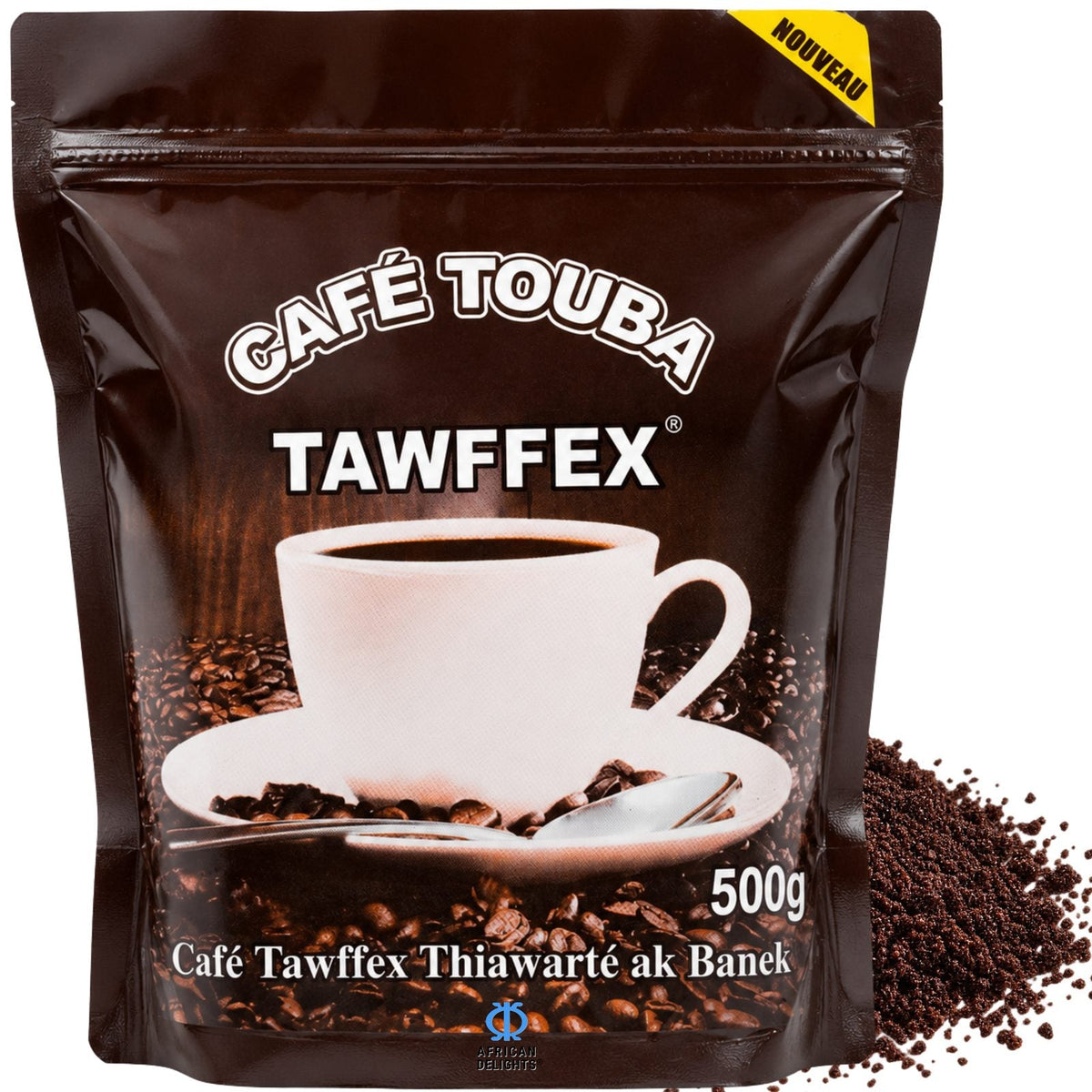
If you drink coffee and haven't tried Cafe Touba, it's worth ordering at least once. It's not a flavored coffee or a sweetened specialty drink — it's spiced ground coffee from Senegal, where the spice (grains of selim, a smoky West African pepper) is mixed directly into the grounds before brewing. The result is a cup of coffee that has the structure and caffeine of standard coffee but a distinctly different flavor: deeper, slightly smoky, with a warmth that lingers after each sip.
What Cafe Touba Is
Cafe Touba originates from the city of Touba in Senegal, the spiritual center of the Mouride Brotherhood — a major Sufi Muslim order with millions of followers across West Africa and the diaspora. The drink is associated with the Brotherhood and with Cheikh Amadou Bamba, the founder of the movement, which is why it's named after the city.
The defining characteristic is the addition of grains of selim (djar) — a pepper native to West Africa with a eucalyptus and clove-like aroma — to the coffee grounds before brewing. Some versions also add clove. The spices are ground with the coffee beans or mixed in afterward; either way, they're brewed together rather than added as a separate flavoring after the fact.
What Cafe Touba Tastes Like
The flavor is coffee-forward with a distinctly smoky, earthy undertone from the grains of selim. It's not sweet, not mild, and not particularly similar to flavored coffee drinks. The aroma is striking — grains of selim have a smell that's hard to describe except as somewhere between black pepper, eucalyptus, and something resinous. Once you've smelled Cafe Touba brewing, it's unmistakable.
Compared to espresso or standard filter coffee, Cafe Touba is typically made strong and served in small cups — more in the espresso tradition than the American filtered coffee tradition. It's generally sweetened with sugar and sometimes taken with condensed milk, though how you drink it is entirely personal. For a guide to West African coffee and condensed milk combinations, see our West African coffee guide.
How to Brew Cafe Touba
The traditional method is a stovetop drip brewer called a tangal — a ceramic or metal filter pot designed for the strong, spiced brew. In practice, you can make a good approximation with whatever brewing equipment you have:
- French press: Use a finer grind than you would for standard filter coffee; steep for 4–5 minutes before pressing
- Pour-over: Works well — pour slowly over the grounds, and use a ratio of about 1:12 coffee to water for a strong cup
- Stovetop espresso maker (Moka pot): Close to the traditional result in terms of concentration and intensity
- Drip machine: Functional but produces a weaker result than the other methods; use more grounds than you normally would
Serve in small cups, sweetened to taste, and drink it hot. Cafe Touba cools and becomes bitter faster than plain coffee because of the spices.
Where to Buy Cafe Touba in the US
Outside of Senegalese neighborhoods in cities like New York (Harlem, Little Senegal), Atlanta, and Houston, Cafe Touba is essentially unavailable in physical stores. Most African grocery stores don't carry it; mainstream grocery stores don't carry it at all. Online ordering is the practical option for most of the US.
Our Cafe Touba is available to order online with shipping across the US. It ships as pre-ground coffee with grains of selim already incorporated, so there's no measuring or mixing required — it's ready to brew.
Cafe Touba as a Gift
A bag of Cafe Touba is one of the more interesting coffee gifts available — specific enough to feel considered, unfamiliar enough to be genuinely new for most recipients, and practical enough that a coffee drinker will actually use it. It works well as a standalone gift, as part of a West African food gift basket, or paired with a small bag of another West African specialty tea for a broader hot drinks set.
For other West African hot drink options, see our ataya tea brewing guide (Senegalese green tea ceremony) and our ginger honey tea guide for a warming, non-coffee option in the same seasonal range.
Other West African Hot Drinks Worth Ordering
If you're building a collection of West African hot drinks:
- Our 3 Ballerina herbal tea — a classic African-market herbal tea blend, widely available in West African communities
- Our ginger honey tea — instant-prep, warming, good for winter drinking
- Ataya (Senegalese gunpowder green tea) — brewed in the traditional three-glass ceremony; see our ataya guide for details
All available in our groceries collection.
Retail and Wholesale Options
You can shop all products mentioned in this guide at African Delights — our main retail store with individual-unit pricing and shipping across the US. If you're stocking up for a restaurant, grocery store, or ecommerce operation, our wholesale storefront Ghana Trade House USA offers case-pack pricing on the same products. Visit our wholesale info page to see what's available in bulk.
Frequently Asked Questions
What spice is in Cafe Touba?
The primary spice is grains of selim (also called djar or African pepper) — a smoky, aromatic West African pepper with a flavor profile somewhere between black pepper, eucalyptus, and clove. Some versions also include clove.
Does Cafe Touba have more or less caffeine than regular coffee?
Cafe Touba uses the same coffee base as any other coffee, so caffeine content is similar. It's typically brewed strong, which means the serving you drink may have more caffeine than a weaker filtered coffee, but that's a function of brew strength, not the spice.
Can I buy Cafe Touba at African grocery stores in the US?
It's inconsistently available — some larger African grocery stores in major cities carry it, but it's not reliably stocked. Ordering online from African Delights ensures you get it when you want it.
How should I store Cafe Touba?
Store in an airtight container away from light and heat, the same as any ground coffee. Use within 2–3 weeks of opening for best flavor, or freeze in a sealed bag for longer storage.


