
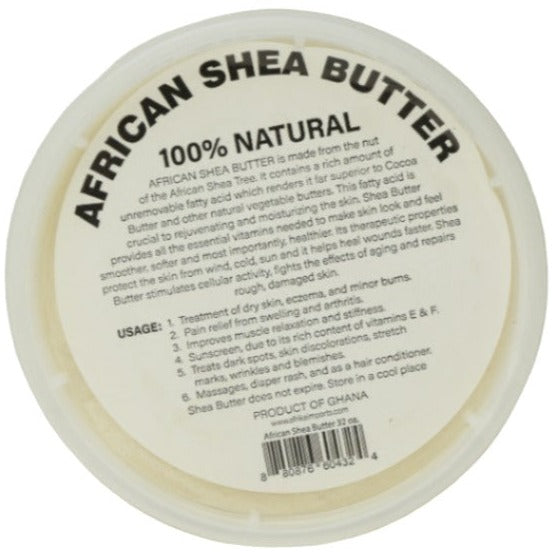
Raw shea butter looks nothing like the smooth, whipped tubs sold as "shea butter lotion" — and that difference in texture is exactly what tells you it's the real, unrefined thing.
What Raw Shea Butter Is
Raw (unrefined) shea butter is extracted from the nut of the African shea tree through a traditional process of roasting, grinding, and hand-kneading, without the chemical refining and deodorizing steps used to produce the smoother, whiter, less-scented shea butter found in many commercial lotions. Our African Delights shea butter keeps that unrefined character.
What to Expect: Texture and Scent
Raw shea butter typically has an ivory to pale yellow color, a firm, slightly waxy texture at room temperature that softens on contact with skin, and a distinct nutty, earthy scent that fades as it's absorbed. This is normal — a raw batch that's completely odorless and pure white has usually been refined, which strips out some of the natural compounds along with the smell.
How to Use It
Because raw shea butter is firm, warming a small amount between your palms before applying makes it easier to spread. It's commonly used as a standalone body moisturizer, a lip balm, a scalp and hair treatment, and a soothing layer over dry patches or rough skin (elbows, heels, knuckles). We also carry Yorkumi shea butter if you want to compare texture and scent between brands.
Pairing with Black Soap
Shea butter and African black soap are a common pairing — black soap's cleansing action can leave skin feeling stripped, and shea butter is the traditional follow-up moisturizer. See our full African black soap guide or pick up a bar of our JRA African black soap to build the full routine, detailed in our JRA bath and body routine guide.
How to Store It
Shea butter is sensitive to heat — it melts to a liquid oil above roughly 90°F (32°C) and can re-solidify with a slightly different texture afterward. Store it in a cool, dry place out of direct sunlight, ideally in an airtight container to limit air exposure, which can gradually affect scent and texture over long storage periods.
Shea Butter Grades
Shea butter is sometimes graded (A through F, in various informal systems used across the industry) based on how it was extracted and processed, with the least-processed grades generally retaining the most natural texture, scent, and nutrient content. This grading isn't universally standardized across all sellers, so relying on the description of "raw" or "unrefined" alongside the color and scent cues covered above is a more reliable way to gauge what you're actually getting.
Common Mistakes When Using It
The most common mistake is applying too much at once — a little goes further than it looks, since raw shea butter is more concentrated than a diluted lotion. Applying a thick layer can leave skin feeling greasy rather than absorbed; a thin layer, warmed and worked in thoroughly, usually gives a better result than one thick application.
Raw vs. Refined: Which to Choose
If you want the full range of natural compounds and a more traditional texture and scent, raw/unrefined shea butter is the more authentic choice. If you prefer a milder scent and a lighter, whipped consistency, a refined shea butter product — like our cocoa butter lotion, for a different but related option — may suit your preference better. Browse our full moisturizers collection to compare.
Frequently Asked Questions
Why does raw shea butter have a strong smell?
Raw, unrefined shea butter keeps its natural nutty, earthy scent because it isn't deodorized; that scent fades as it's absorbed into skin.
How should raw shea butter be stored?
Store it in a cool, dry place out of direct sunlight, ideally in an airtight container, since heat above about 90°F (32°C) melts it and prolonged air exposure can affect its texture and scent.
Why is raw shea butter firm and hard to spread?
Because it's unrefined and solid at room temperature, warming a small amount between your palms before applying makes it easier to spread.
What should I use with shea butter for a full routine?
Shea butter is commonly paired with African black soap — the soap cleanses, and the shea butter moisturizes afterward to offset any dryness.


