
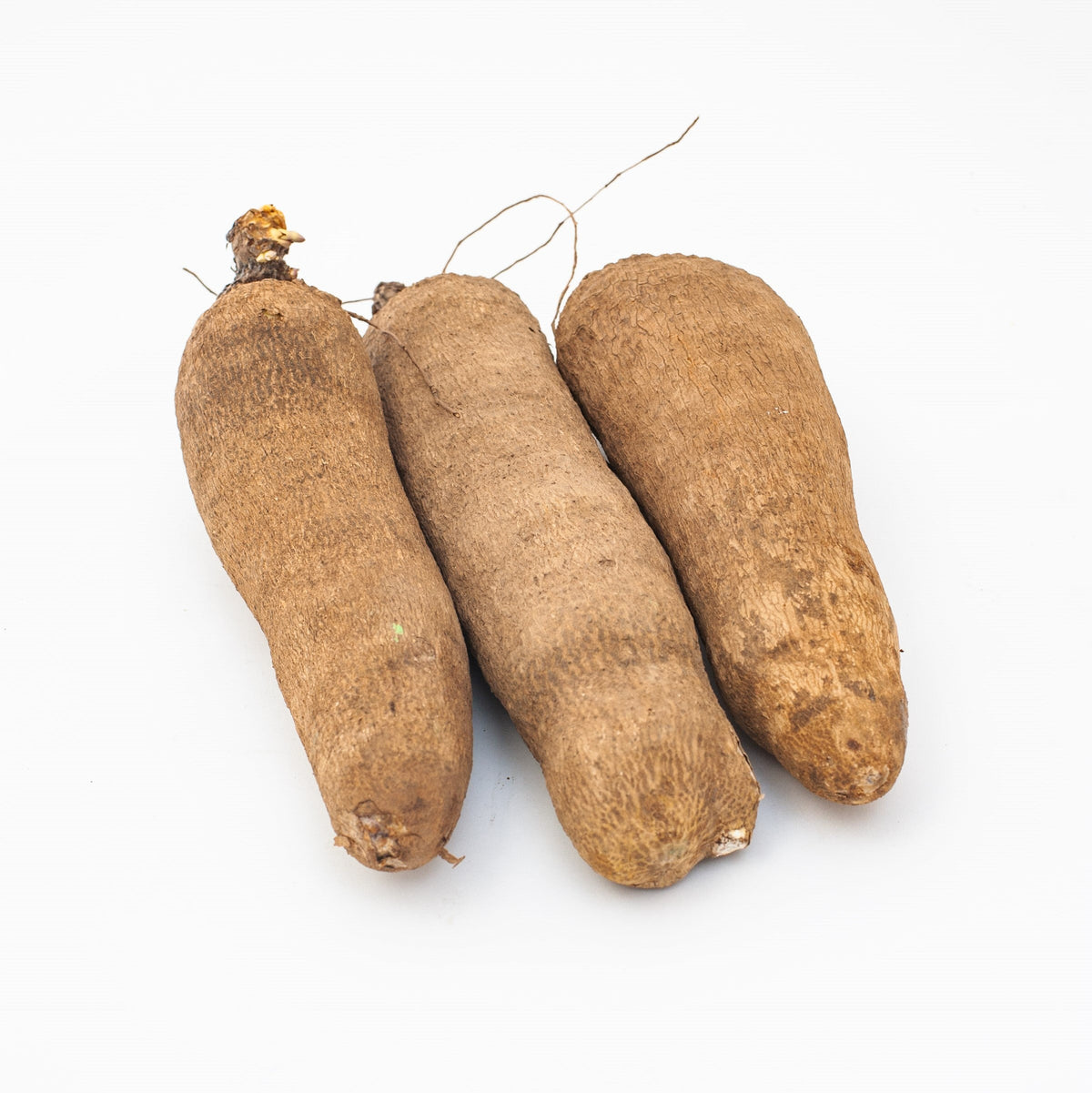
Ghana yam is a genuinely different vegetable from what "yam" refers to in most US grocery stores (which usually means a sweet potato variety) — a starchy tuber with a firmer texture that holds up to several distinct cooking methods, each giving a different result.
Choosing and Preparing Fresh Yam
Look for yam that feels firm and heavy for its size, without soft spots or visible mold at the cut ends. Our fresh Ghana yam and Puna Ghana yam are both fresh whole tubers, peeled and cut into pieces before cooking.
Boiled Yam
Peel and cut the yam into large chunks, then boil in salted water until fork-tender, typically 20–30 minutes depending on piece size. Boiled yam is the simplest preparation and the base for most other yam dishes — served on its own with a stew, or mashed further for other uses.
Fried Yam
For fried yam, boil or par-boil the pieces first until mostly tender, then pan-fry or deep-fry until the outside turns golden and slightly crisp while the inside stays soft. Fried yam is a popular street-food style preparation, often served with a pepper sauce or alongside eggs.
Pounded Yam
Pounded yam is made by boiling yam until very soft, then pounding it (traditionally with a mortar and pestle) into a smooth, stretchy dough similar in texture to fufu. If you'd rather skip the pounding labor, our Iyan Ado pounded yam flour reconstitutes with hot water into a similar texture without needing fresh yam at all. See our full pounded yam vs. fufu comparison for how the two swallow foods differ.
Adding Palm Oil
Boiled or fried yam pairs well with a simple palm oil and pepper sauce (called "garri and yam" in some regional variations, or simply "yam and stew") — our red palm oil is the traditional base for that quick accompanying sauce.
Avoiding Common Mistakes
Cutting yam pieces too large slows down cooking unevenly, leaving the outside soft while the center stays firm — cutting into more uniform, moderate-sized chunks helps everything cook through at roughly the same rate. Yam also oxidizes and can discolor slightly once peeled and exposed to air; keeping peeled pieces submerged in water until you're ready to cook prevents this.
Freezing and Reheating Cooked Yam
Boiled yam freezes reasonably well for later use, though the texture softens somewhat on thawing — reheating gently (steaming or a covered pan with a splash of water, rather than a dry microwave) helps preserve more of the original texture than a fast, high-heat reheat would.
Choosing Between Preparations for a Meal
Boiled yam works well as a quick, simple side; fried yam suits a more indulgent breakfast or snack moment; and pounded yam is the choice when the meal is built specifically around a soup or stew meant to be scooped rather than spooned. Thinking about the rest of the meal first often makes the preparation choice straightforward. Preparing more than one method for a larger gathering also gives guests a choice rather than committing the whole meal to a single yam preparation, which is especially useful when feeding a mixed group with different preferences and appetites.
Buying the Right Amount
Yam is sold whole and can be quite large, so estimate roughly how much you'll actually use before buying, since a partially used tuber needs proper storage to stay fresh for a second cooking session later in the week.
What to Serve Yam With
Boiled and fried yam pair well with a wide range of West African stews — our garden egg stew guide is one option, alongside the many other stews and soups traditionally served with yam.
Frequently Asked Questions
Is Ghana yam the same as American sweet potato yam?
No — Ghana yam is a starchy tuber with a firmer texture, genuinely different from what "yam" usually refers to in US grocery stores (typically a sweet potato variety).
How long does it take to boil yam?
Yam cut into large chunks typically takes 20–30 minutes to boil until fork-tender, depending on piece size.
What's the difference between boiled and pounded yam?
Boiled yam stays in firm pieces, while pounded yam is boiled very soft and then pounded into a smooth, stretchy dough similar to fufu.
Can pounded yam be made without fresh yam?
Yes — pounded yam flour reconstitutes with hot water into a similar texture without needing to boil and pound fresh yam.


