
Ataya isn't just a drink — it's a whole social ritual across much of West Africa, particularly Senegal, Mali, and Mauritania, where the multi-round brewing process is as much the point as the tea itself.
What Ataya Is
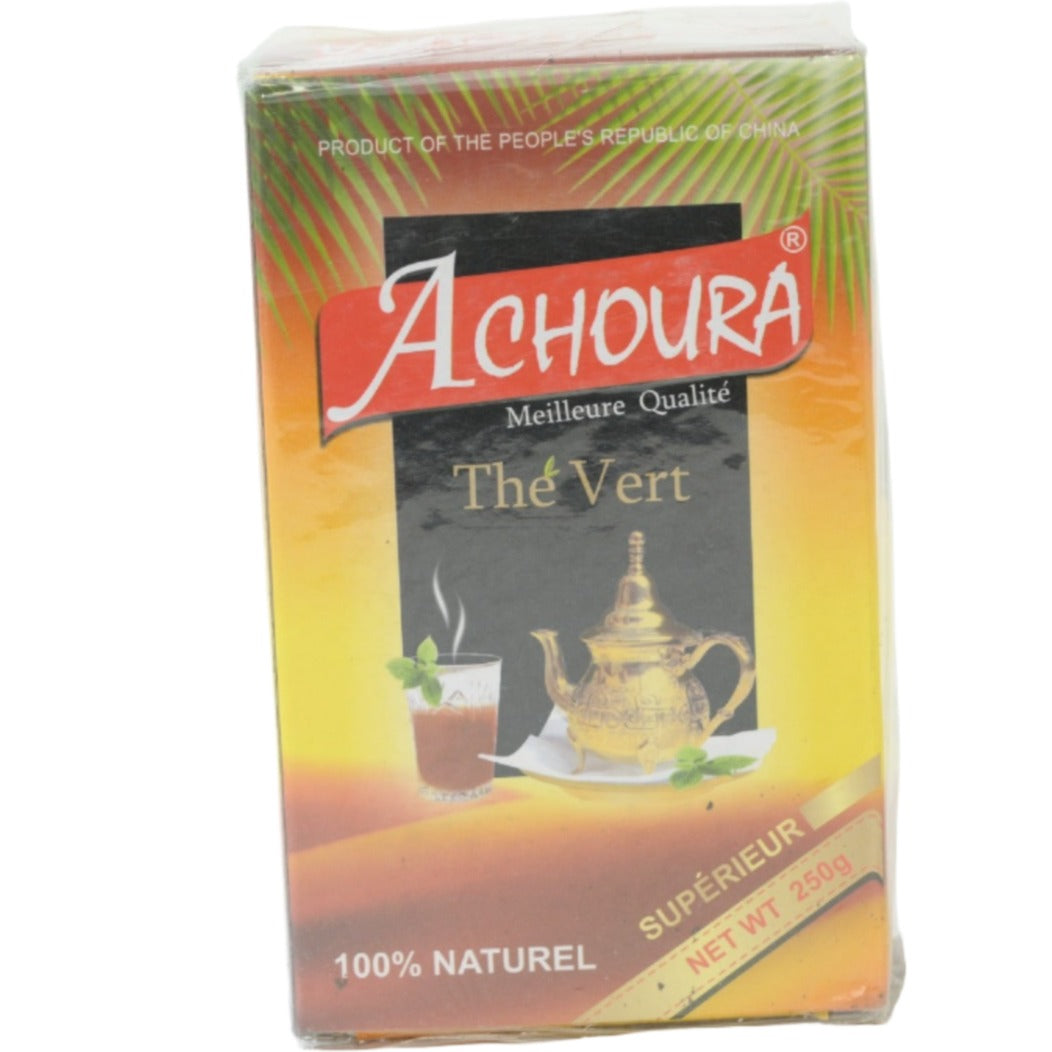
Ataya is a strong, sweet green tea, typically made with Chinese gunpowder green tea leaves, brewed in small metal teapots and served in tiny glasses across multiple rounds. Our Achoura green tea is a traditional option used for preparing ataya at home.
The Three-Round Tradition
Ataya is traditionally served in three distinct rounds, each with a different character: the first round is strong and slightly bitter ("strong as death" in the common saying), the second is milder and sweeter ("mild as life"), and the third is the sweetest and lightest ("sweet as love"). Each round uses the same tea leaves, re-brewed with fresh water and sugar, which is part of what gives the three rounds their progressively different character.
How to Brew It
Add tea leaves and a small amount of water to a small metal teapot, bring it to a boil, then pour the tea back and forth between the pot and a glass (or between two glasses) from a height — a technique that both cools the tea and creates the characteristic frothy top associated with well-poured ataya. Add sugar generously, especially in the first two rounds, and repeat the pouring motion until a good froth forms, then serve in small glasses.
The Social Ritual
Ataya is traditionally a social, unhurried process — brewing and drinking through all three rounds can take an hour or more, and it's typically prepared and shared in a group setting rather than brewed quickly for one person. The slow pace is part of the tradition, not an inefficiency to work around.
Sweetening and Adjusting
Traditional ataya uses a significant amount of sugar, particularly in the first two rounds — if you prefer a less sweet version, reducing the sugar (or substituting raw honey) is a reasonable adjustment, though it will shift the traditional flavor profile.
Equipment You'll Need
Traditional ataya preparation uses a small metal teapot (often aluminum or stainless steel) with a long spout, which makes the pouring-from-a-height technique both safer and more effective than trying it with a standard ceramic teapot. A set of small glasses (rather than large mugs) is also part of the traditional presentation, since the whole ritual is built around small, repeated servings rather than one large cup.
A Cultural Practice Worth Understanding
Beyond the drink itself, ataya functions as a genuine social institution in the regions where it's practiced — a reason for friends, family, or neighbors to sit together for an extended period, talk, and share something prepared with real care and attention. Approaching it as purely a caffeine delivery method misses most of the point of the tradition.
Common Mistakes When Brewing Ataya
Rushing the pouring technique (not enough height or repetitions) is the most common reason a home-brewed batch lacks the characteristic froth associated with well-made ataya. Under-sweetening the first round is another common miss — the traditionally strong, generously sweetened first pour is part of what makes the progression through all three rounds work as intended.
Other Tea Options
If you want to explore beyond gunpowder green tea, our Safari Pure tea is a straightforward black tea option, and our 3 Ballerina herbal tea guide covers a different herbal alternative. Browse our full tea collection for more.
Frequently Asked Questions
What tea is used for ataya?
Ataya is typically made with Chinese gunpowder green tea leaves, brewed strong and sweetened generously.
Why is ataya served in three rounds?
Each of the three rounds re-brews the same leaves with fresh water and sugar, producing a progressively milder, sweeter tea — traditionally described as "strong as death," "mild as life," and "sweet as love."
Why is ataya poured from a height?
Pouring the tea back and forth from a height cools it and creates the characteristic frothy top associated with well-prepared ataya.
Is ataya meant to be brewed quickly?
No — the full three-round process is traditionally an unhurried, social ritual that can take an hour or more, typically shared in a group setting.


