
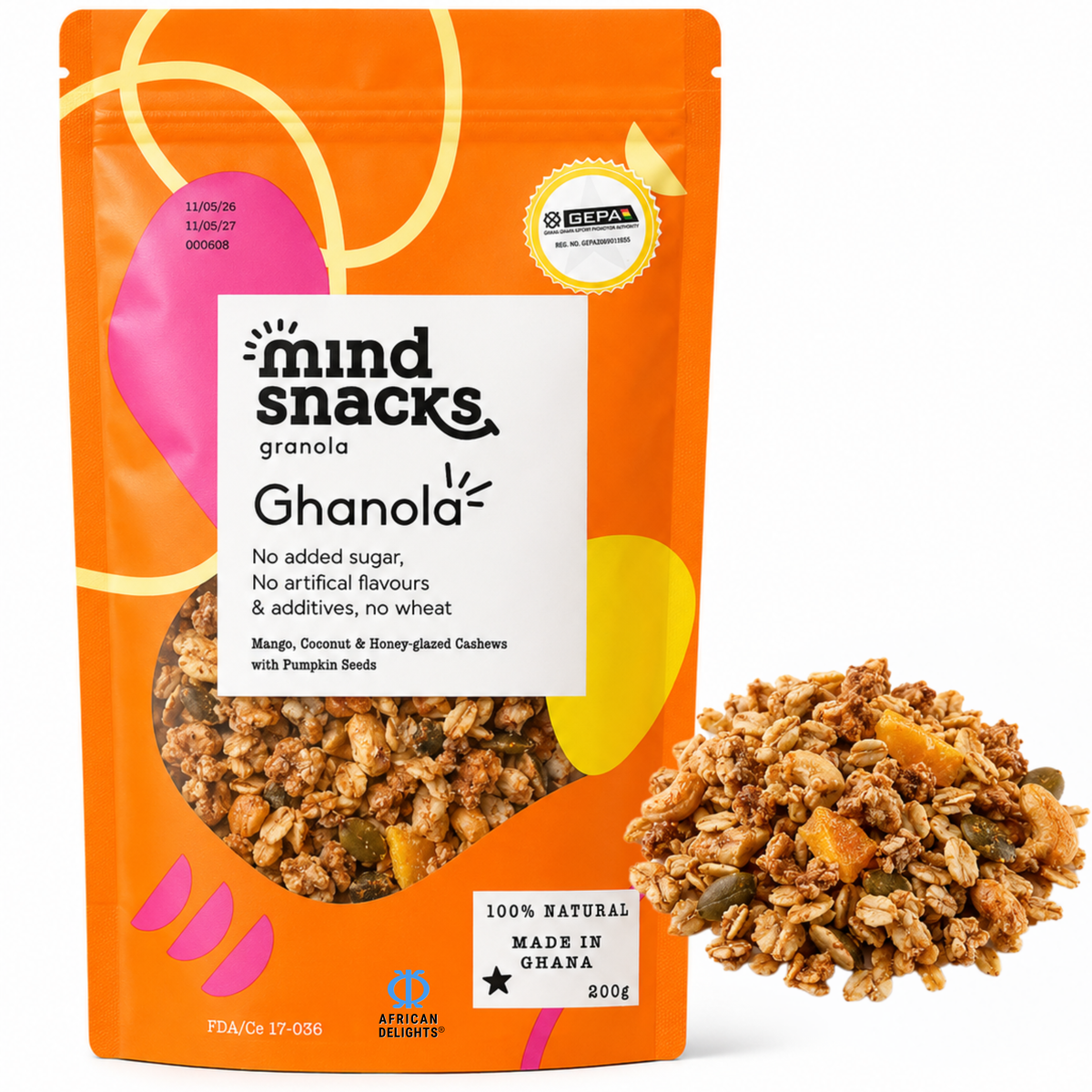
Granola isn't usually thought of as a West African category, but Ghanola and its chocolate counterpart Chocanola take the same oats-and-clusters format and build it around West African ingredients and flavor sensibilities.
What Ghanola Is
Ghanola is a superfood granola blend that combines oats and other grains with West African-inspired ingredients, positioned as a nutrient-dense breakfast or snack option rather than a purely indulgent treat. Our Ghanola superfood Chocanola combines both the plain and chocolate versions of the blend.
What Chocanola Adds
Chocanola takes the same granola base and adds a cocoa element, giving it a chocolatey flavor profile that works well as a dessert-adjacent snack rather than a strictly breakfast item. It's a good option if you want the crunch and nutrition of granola with a sweeter, more indulgent edge.
How to Eat It
Granola works well eaten dry as a snack, poured over yogurt, mixed into milk like cereal, or sprinkled over fruit. A drizzle of raw African honey adds natural sweetness if you prefer it less plain, and mixing in some roasted cashews — see our full roasted cashews guide — adds extra crunch and protein.
Building a Snack or Breakfast Board
Granola pairs naturally with other West African snack staples for a fuller spread — dried fruit like our dried mango, pineapple, and coconut chips (see our full tropical snack guide) adds natural sweetness and chew alongside granola's crunch, making for a well-rounded snack or breakfast board.
Why "Superfood" Granola Is Framed This Way
Granola marketed as "superfood" typically emphasizes whole grains, nuts, and other nutrient-dense add-ins as its selling point, positioning it as a more substantial choice than a purely sugar-driven cereal. As with any packaged food carrying a wellness-oriented label, checking the actual ingredient list gives a clearer picture than the marketing term alone.
Portioning Granola
Because granola is calorie-dense for its volume — the oats, nuts, and any dried fruit or chocolate pieces pack more into a small serving than they might appear to — using a measured serving size rather than eyeballing a bowlful helps keep portions consistent, especially if you're eating it as a daily breakfast staple rather than an occasional treat.
Storage
Keep granola in a sealed, airtight container at room temperature to preserve its crunch — exposure to humidity is the main thing that softens granola clusters over time. It generally keeps well for several weeks stored this way, though checking the package for a specific best-by date is always the safer bet.
Kid-Friendly Snacking
Chocanola's chocolate flavor in particular makes it an easier sell for kids who might turn their nose up at a plain oat-based granola, while still delivering more whole-grain content than a purely sugar-driven cereal or candy alternative — a reasonable middle-ground snack for households balancing kid appeal with nutrition. Portioning it into small, kid-sized snack bags ahead of time also makes it easier to grab for school lunches or after-school snacking without extra effort each day, especially on busy mornings when there's little time to prepare anything else before heading out the door for school, work, or an early practice.
Why Try a West African Granola Blend
If you already enjoy granola as a pantry staple, trying a West African-formulated version like Ghanola or Chocanola is a low-effort way to bring a regional twist into an everyday breakfast routine, without needing to prepare a full traditional dish. Browse our full breakfast collection for more options to build out the rest of the meal.
Frequently Asked Questions
What is Chocanola?
Chocanola is a chocolate version of Ghanola granola, adding a cocoa element to the oats-and-clusters base for a sweeter, dessert-adjacent flavor.
How do you eat Ghanola?
It can be eaten dry as a snack, poured over yogurt, mixed into milk like cereal, or sprinkled over fruit, and pairs well with honey or roasted nuts for extra flavor and crunch.
How should granola be stored?
Keep it in a sealed, airtight container at room temperature to preserve its crunch, since humidity is the main factor that softens granola clusters over time.
Is Ghanola suitable for breakfast?
Yes — it's positioned as a nutrient-dense breakfast or snack option, whether eaten with milk, yogurt, or on its own.


