
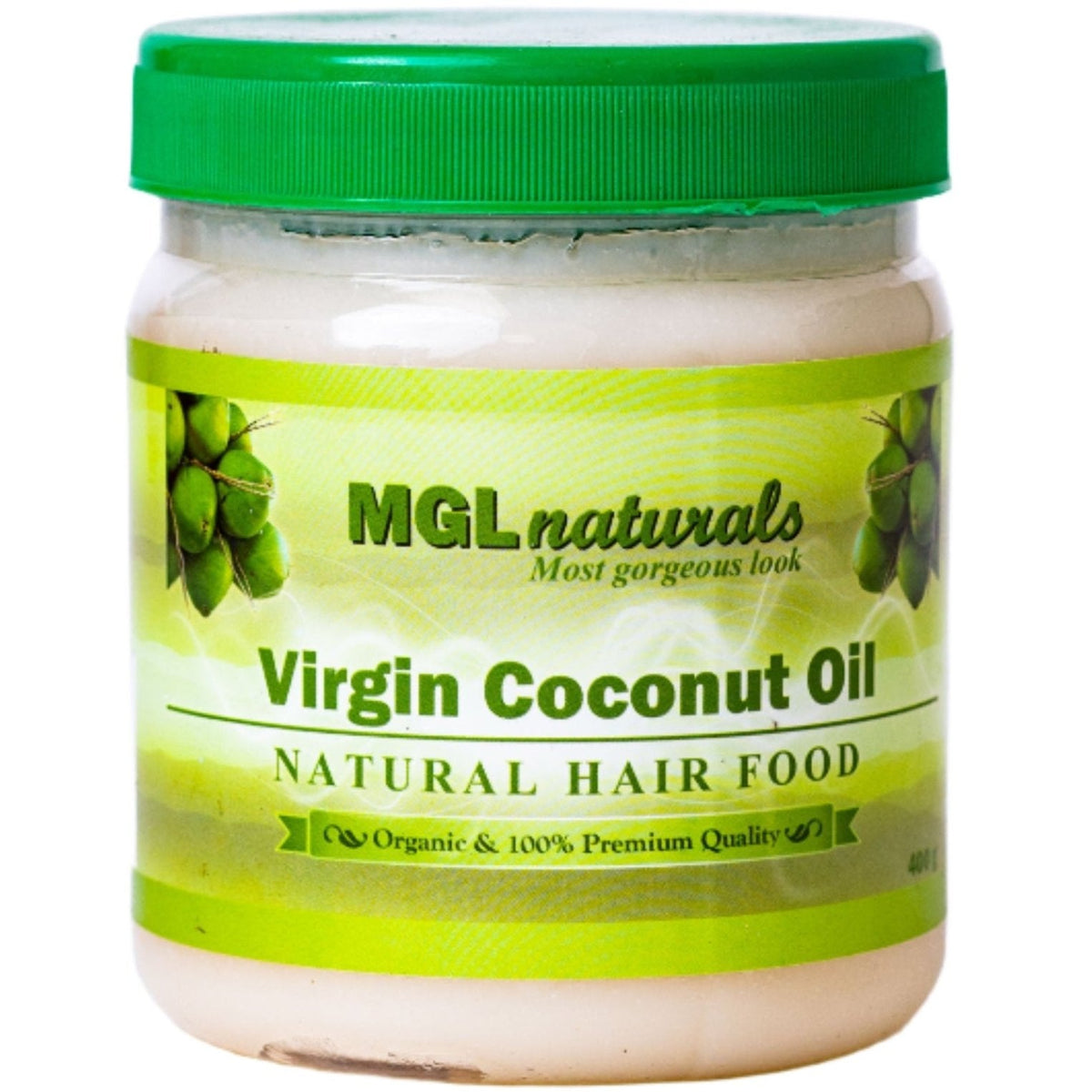
Coconut oil shows up constantly in natural hair care conversations, and unlike a lot of trending ingredients, its reputation is backed by a genuinely useful property: it's one of the few oils that can actually penetrate the hair shaft rather than just coating the surface.
Why Coconut Oil Is Used on Natural Hair
Coconut oil's molecular structure allows it to penetrate into the hair shaft more effectively than many other oils, which is why it's commonly used as a pre-wash treatment or deep conditioner rather than only a surface-level shine product. Our virgin coconut oil is marketed specifically as a natural hair food, in addition to its use as a cooking oil.
How to Apply It
For a pre-wash (pre-poo) treatment, apply coconut oil to dry or damp hair, focusing on the lengths and ends, and let it sit for 20–30 minutes (or longer, even overnight) before shampooing as usual. For a lighter, everyday use, a small amount worked through damp hair after washing can help seal in moisture and add shine, though a little goes a long way — too much can leave hair looking greasy rather than glossy.
Building a Full Routine
Coconut oil pairs well with other natural hair products rather than needing to be the only product in a routine — a leave-in conditioner for daily detangling and frizz control, or a styling cream for dry, curly hair for defining curls, each play a different role than an oil treatment does.
Melting Point and Texture
Coconut oil is solid at cooler room temperatures and melts to a liquid above roughly 76°F (24°C) — this is a normal property of the oil, not a sign it's gone bad. Warming a small amount between your palms before applying makes it easier to work through hair when it's in its solid state.
How to Store It
Store coconut oil in a cool, dry place; it doesn't require refrigeration and keeps well at room temperature for an extended period, since its high saturated fat content makes it relatively resistant to going rancid compared to many other oils. Keep the container sealed to limit exposure to air and moisture.
Using It on the Scalp
Coconut oil can also be massaged directly into the scalp, separate from applying it to the hair strands themselves, which some people find helps with a dry, flaky scalp. Massage a small amount in gently with fingertips rather than rubbing vigorously, which can cause unnecessary friction or tangling, especially on curly or coily hair textures.
How Often to Use It
For a deep pre-wash treatment, once or twice a week is a reasonable starting frequency for most hair types; lighter daily use for shine and frizz control uses a much smaller amount and can be done more frequently without the same buildup risk as a heavier weekly treatment.
Choosing a Grade of Coconut Oil
Virgin (or extra-virgin) coconut oil, extracted without high heat or chemical processing, generally retains more of the oil's natural nutrients and scent than a heavily refined version — worth checking the label if you specifically want the more natural, less-processed option for hair care rather than a refined cooking-oil-grade product.
Pairing with Other Natural Hair Staples
If shea butter is also part of your routine, our shea butter guide covers how it compares as a heavier, more occlusive moisturizer versus coconut oil's more penetrating property — many people use both, at different steps of a routine, rather than choosing one over the other.
Frequently Asked Questions
Why is coconut oil good for natural hair?
Its molecular structure allows it to penetrate into the hair shaft more effectively than many other oils, making it useful as a pre-wash treatment or deep conditioner.
How long should coconut oil sit as a pre-wash treatment?
Typically 20–30 minutes, though some people leave it on longer, even overnight, before shampooing.
Why does coconut oil turn solid or liquid?
Coconut oil is solid at cooler room temperatures and melts to a liquid above roughly 76°F (24°C) — this is a normal property, not a sign it's spoiled.
Does coconut oil need to be refrigerated?
No — it keeps well at room temperature since its high saturated fat content makes it relatively resistant to going rancid.


