
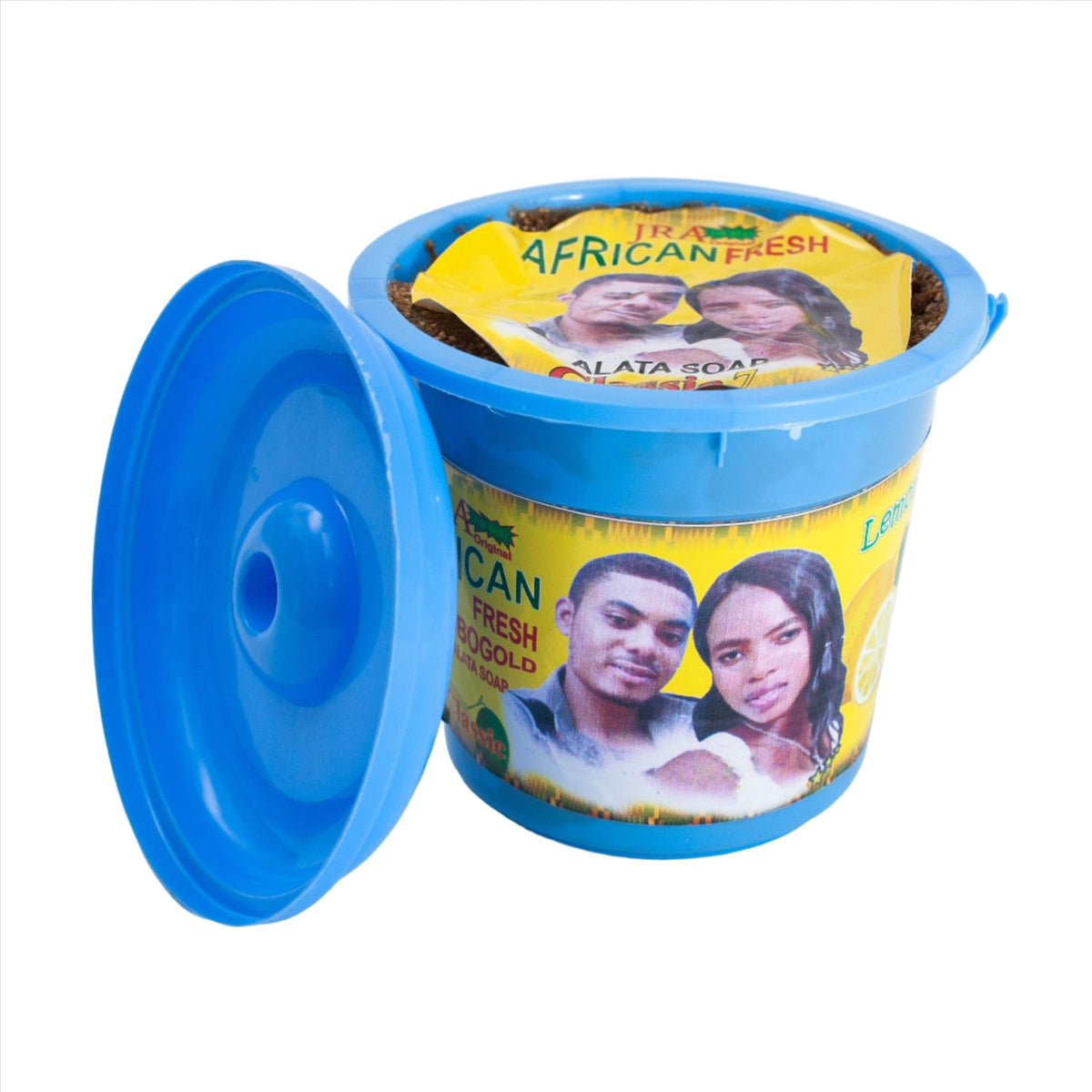
African black soap has a texture and look that surprises first-time buyers — it's soft, dark, and a little crumbly compared to a standard bar of soap — but that's exactly what a traditionally made batch is supposed to look like.
What African Black Soap Is
Traditional African black soap (sometimes called "ose dudu" in Yoruba) is made by roasting plantain skins, cocoa pods, palm leaves, or shea tree bark until they turn to ash, then combining that ash with water and oils like palm kernel oil or shea butter to form the soap. The roasting process is what gives it its dark color and coarse, unrefined texture. Our JRA African black soap follows this traditional classic formulation.
How to Use It
Because black soap is more alkaline and can feel drying on its own compared to synthetic bar soaps, most people use it as a cleanser rather than for extended lathering. Wet the skin, work a small amount of the soap into a lather between your hands or with a washcloth or an exfoliating net sponge (see our net sponge care guide for tips on using one), and rinse thoroughly. Many people follow up with a moisturizer like raw African shea butter afterward, since black soap can leave skin feeling stripped if it isn't followed with hydration — see our full shea butter guide for more on choosing and storing it.
Patch-Testing First
Because raw black soap batches can vary in strength depending on the exact ratio of ash to oils, it's worth patch-testing a small area of skin first, especially for sensitive skin, before using it on the face or in a full-body routine.
How to Store It
African black soap is naturally soft and can dissolve or soften faster than commercial bar soap if left sitting in water. Store it in a dry soap dish that allows water to drain away between uses, and keep it away from direct, prolonged moisture. Wrapping unused portions in wax paper or a breathable cloth (rather than sealed plastic) helps preserve its texture longer.
What to Expect
Batches of traditional black soap can vary slightly in color, texture, and scent from bar to bar since it's made from natural, unrefined ingredients rather than a standardized synthetic formula — that variation is normal and part of what makes it a traditional product rather than a mass-manufactured one.
Using It on Hair and Body
Beyond facial and body cleansing, black soap is sometimes used as a shampoo bar or added to bathwater as a full-body wash. When using it on hair, work it into a lather in the hands first rather than rubbing the bar directly against the scalp, since the coarser texture can be harsh applied directly. As with facial use, following up with a rinse-out conditioner or an oil like shea butter helps offset any dryness.
Cutting and Portioning a Bar
Because black soap is soft, many people cut a larger block into smaller portions for daily use rather than keeping the whole piece exposed to water and air at once. A clean, dry knife works well for this — cut only what you plan to use over the next week or two, and keep the rest wrapped and stored in a cool, dry place away from direct sunlight and humidity, which can accelerate softening.
Traditional vs. Commercial Black Soap
Not all products labeled "black soap" are made the traditional way — some commercial versions use synthetic colorants and hardening agents to mimic the look of traditional black soap without the roasted-ash base. Traditional, unrefined black soap tends to be softer, more irregular in shape, and has a more earthy, less perfumed scent than mass-market versions, which is generally a sign of authenticity rather than a flaw. We also carry natural black soap and Village Fresh herbal black soap as alternatives if you want to compare formulations — see our full soaps and cleansers collection. Once you've settled on a soap, our simple JRA bath and body routine guide walks through building a full routine around it.
Frequently Asked Questions
What is African black soap made from?
Traditional African black soap is made from the ash of roasted plantain skins, cocoa pods, or shea tree bark, combined with oils like palm kernel oil or shea butter.
Why is African black soap soft and crumbly?
Because it's made with natural, unrefined ash and oils rather than synthetic hardening agents, it naturally has a softer, more crumbly texture than commercial bar soap.
How should African black soap be stored?
Store it in a dry, well-draining soap dish away from standing water, and wrap unused portions in wax paper or breathable cloth rather than sealed plastic.
Should I moisturize after using black soap?
Yes — many people follow up with a moisturizer like shea butter, since black soap's cleansing action can leave skin feeling stripped without it.


1 comment
jeanne vol
购买真实的中国护照、美国护照、英国护照、欧盟护照 (微信 ID:mingchung1000) (WhatsApp:+16722050601) https://officialdocssupport.com/zaixian-hefa-huoqu-zhen-shi-huzhao/ 购买真假护照、真假驾照、身份证、社安号(SSN)、在线购买假币/伪钞 办理护照更新服务, 购买高品质的美国、加拿大、英国、澳大利亚、德国、中国护照,以及美国绿卡、结婚证、公民身份证明,WhatsApp:+16722050601 欧盟/美国/英国/加拿大驾照、身份证、签证等 联系我们
購買真實註冊的護照、駕照、居留許可和簽證 在 (微信 ID:mingchung1000) (WhatsApp:+16722050601) https://officialdocssupport.com/zaixian-hefa-huoqu-zhen-shi-huzhao/
合法購買真實護照 在 https://officialdocssupport.com (WhatsApp:+16722050601)。購買真實護照,購買真實護照 [WhatsApp:+1(672)2050601]。我們也提供身分證、駕照、綠卡、居留證、雅思成績、工作許可和公民證書的辦理服務。我們提供全球服務,可辦理以下國家的護照、駕照、身分證、簽證、印章以及真假證件:(歐盟國家)、美國、加拿大及其他許多國家。我們為您提供世界一流的服務。我們的大多數客戶都體驗過我們真實可靠、高品質的服務。網址:https://officialdocssupport.com 快速辦理工作許可、雅思成績、TOIC及其他證書,快速辦理加拿大公民證書、註冊身份驗證護照、加拿大卡、美國卡、學生卡、國際卡、私人畢業卡、收養證書、洗禮證書、出生證書、死亡證書、離婚證書、結婚證書、海關證書、高中畢業卡、收養證書、洗禮證書、出生證書、死亡證書、離婚證書、結婚證書、海關證書、高中畢業卡、收養證明。文憑、家庭教育文憑、大學學位、職業技能證書、社會安全卡
更多信息,請聯繫:
微信 ID:mingchung1000
wechat id: mingchung1000
網址:https://officialdocssupport.com/zaixian-hefa-huoqu-zhen-shi-huzhao/
WhatsApp:+1(672)2050601
信箱:contact@officialdocssupport.com
https://officialdocssupport.com
購買真護照,購買真假護照,購買中國護照,購買美國護照,購買台灣護照,購買假幣。購買美元(USD),購買人民幣(RMB),購買假幣(CNY),購買馬來西亞林吉特(MYR),購買加幣(CAD),購買澳元(AUD),購買英鎊(GBP),購買歐元(EUR),購買港元(HK)。購買未經檢驗的高品質鈔票。在線購買假人民幣、在線購買護照、購買加拿大永久居留權、直接移民加拿大、出售合法生物識別護照、出售護照、中國簽證等、在線購買護照、在線購買新加坡護照、購買瑞士護照、購買馬紹爾群島護照、購買日本護照、購買美國護照(購買假幣、購買假美元/澳元/加元/人民幣/歐元/人民幣、在線購買真實駕照)
信箱:微信 ID:mingchung1000
wechat id: mingchung1000
網址:https://officialdocssupport.com
WhatsApp:+1(672)2050601
信箱:contact@officialdocssupport.com
https://officialdocssupport.com
在線購買真護照
線上購買真實駕照
線上購買真/假證件
在線購買假護照
出售英國護照
在線購買真加拿大護照
線上購買真加拿大駕照
線上購買真身份證
投資入籍計劃
合法第二護照
如何合法取得第二國籍
投資護照
提供投資入籍的國家
黃金護照計劃
投資者第二護照
快速入籍計劃
雙重國籍選項
透過投資和捐贈獲得公民身份
投資居留權公民身份
2026年如何合法取得第二本護照
最適合獲得第二公民身分的國家
經濟實惠的投資入籍項目
透過合法入籍項目獲得真實護照
該
政府認可的護照投資項目
在線購買美國護照(正品)
在線購買居留許可(正品)
在線購買簽證(正品)
在線購買德國護照
線上購買法國護照
在線購買駕駛執照(正品)
在線購買已註冊的正品護照
在線購買已註冊的正品身份證
在線購買外交護照
在線購買社會安全號碼(正品)
在線購買綠卡(正品)
在線購買護照、身份證、駕駛執照和簽證(正品)
*購買*真假護照、駕照和身分證(正品)
我們在護照、駕駛執照和身分證的註冊、製作和交付方面擁有多年經驗護照、駕駛執照和身分證。
購買護照、駕照、身分證、印章、出生證明和簽證正本。我們是一支獨立的專業IT和資料庫技術團隊,專精於製作100%高品質的證件,例如護照、駕照、身分證、印章、簽證、畢業證書等,服務範圍涵蓋美國、澳洲、英國、比利時、巴西、加拿大、義大利、芬蘭、法國、德國、以色列、墨西哥、荷蘭、南非、西班牙、瑞士等所有國家。
我們也製作駕照、身分證、簽證、外交護照、社保卡、綠卡、托福成績單等。 #在線購買真實護照 #在線購買原件簽證 #在線購買真實身份證 #在線購買駕照 #在線購買真實證書 #在線購買真實綠卡 #在線購買真實護照 #在線購買註冊簽證 #在線購買註冊駕照 #在線購買出生證明 #在線購買身份證#購買綠卡 #購買真護照、駕照、身份證、簽證。您是否也對申請加拿大、美國或歐盟公民身份感興趣?
微信 ID:mingchung1000
wechat id: mingchung1000
網址:https://officialdocssupport.com
WhatsApp:+1(672)2050601
信箱:contact@officialdocssupport.com
https://officialdocssupport.com
購買真實阿爾巴尼亞護照和駕照
購買真實安道爾護照和駕照
購買真實安提瓜和巴布達護照和駕照
購買真阿根廷護照和駕照
購買真實亞美尼亞護照和駕照
購買真奧地利護照和駕照
購買真阿塞拜疆護照和駕照
購買真巴哈馬護照和駕照購買正版巴貝多護照和駕照。
購買正版註冊的白俄羅斯護照和駕照。
購買正版註冊的伯利茲護照和駕照。
購買正版註冊的玻利維亞護照和駕照。
購買正版註冊的波士尼亞和黑塞哥維那護照和駕照。
購買正版註冊的巴西護照和駕照
購買正版註冊的保加利亞護照和駕照
購買正版註冊的加拿大護照和駕照
購買正版註冊的智利護照和駕照
購買正版註冊的哥倫比亞護照和駕照
購買正版註冊的哥斯大黎加護照和駕照
購買正版註冊的克羅埃西亞護照和駕照
購買正版註冊的古巴護照和駕照
購買正版註冊的賽普勒斯護照和駕照
購買正版註冊的捷克護照和駕照
購買正版註冊的多明尼克護照和駕照
購買正版註冊的多明尼加護照和駕照
購買正版註冊的厄瓜多爾護照和駕照
購買正版註冊的薩爾瓦多護照和駕照購買真實有效的愛沙尼亞護照和駕照。
購買真實有效的芬蘭護照和駕照。
購買真實有效的法國護照和駕照。
購買真實有效的格魯吉亞護照和駕照。
購買真實有效的德國護照和駕照。
購買真實有效的希臘護照和駕照。
購買真實有效的格林納達護照和駕照。
購買真實有效的危地馬拉護照和駕照。
購買真實有效的圭亞那護照和駕照。
購買真實有效的海地護照和駕照。
購買真實有效的洪都拉斯護照和駕照。
購買真實有效的匈牙利護照和駕照。
購買真實有效的冰島護照和駕照。
購買真實有效的愛爾蘭護照和駕照。
購買真實有效的義大利護照和駕照。
購買真實有效的牙買加護照和駕照。
購買真實有效的哈薩克護照和駕照。
購買真實有效的科索沃護照和駕照。購買真實有效的拉脫維亞護照和駕照;購買真實有效的列支敦士登護照和駕照;購買真實有效的立陶宛護照和駕照;購買真實有效的盧森堡護照和駕照;購買真實有效的馬耳他護照和駕照;購買真實有效的墨西哥護照和摩納哥;購買真實駕照的真實駕照和護照;購買正版註冊的尼加拉瓜護照和駕照;購買正版註冊的北馬其頓護照和駕照;購買正版註冊的挪威護照和駕照;購買正版註冊的巴拿馬護照和駕照;購買正版註冊的巴拉圭護照和駕照;購買正版註冊的秘魯護照和駕照;購買正版註冊的波蘭護照和駕照;購買正版註冊的葡萄牙護照和駕照;購買正版註冊的羅馬尼亞護照和駕照;購買正版註冊的俄羅斯護照和駕照;購買正版註冊的聖基茨和尼維斯護照和駕照;
購買正版註冊的聖露西亞護照和駕照;
購買正版註冊的聖文森和格林納丁斯護照和駕照;
購買正版註冊的聖馬利諾護照和駕照。
購買真實有效的塞爾維亞護照和駕照。
購買真實有效的斯洛伐克護照和駕照。
購買真實有效的斯洛維尼亞護照和駕照。
購買真實有效的西班牙護照和駕照。
購買真實有效的蘇利南護照和駕照。
購買真實有效的瑞典護照和駕照。
購買真實有效的瑞士護照和駕照。
購買真實有效的特立尼達和多巴哥護照和駕照。
購買真實有效的土耳其護照和駕照。
購買真實有效的烏克蘭護照和駕照。
購買真實有效的英國護照和駕照。
購買真實有效的美國護照和駕照。
購買真實有效的烏拉圭護照和駕照。
購買真實有效的梵蒂岡護照和駕照。
購買真實有效的委內瑞拉護照和駕照。
微信 ID:mingchung1000
wechat id: mingchung1000
網址:https://officialdocssupport.com
WhatsApp:+1(672)2050601
信箱:contact@officialdocssupport.com
https://officialdocssupport.com
線上購買假駕照
在線購買護照 https://officialdocssupport.com/buyrealpassportsanddriverslicense/
線上購買假駕照
線上購買護照 https://officialdocssupport.com/buyrealpassportsanddriverslicense/
在線購買已註冊護照
在線購買真實和假已註冊護照
在線購買已註冊雅思/托福證書
線上購買美國護照
線上購買芬蘭護照
在線購買英國護照
線上購買德國護照 | 德國護照申請
線上申請德國護照
購買真實護照在線
在线办理护照需要多长时间?
可以预约在线办理护照更新吗?
如何获取真实或伪造的护照?
可以在线更新美国护照吗?
获取美国护照最简单的方法是什么?
可以在中国更新美国护照吗?
可以在线更新护照吗?
更新护照有哪些要求?
在香港更新护照需要多少费用?
如何在香港申请美国签证?
可以在线申请美国签证吗?
获取美国签证最快的方法是什么?
美国签证需要多少费用?
考取驾照需要多少费用?
可以在线更新驾照吗?
可以预约办理驾照相关事宜吗?
在美国如何考取驾照?
如何申请驾照?
中国公民可以申请申根签证吗?
可以在7天内拿到申根签证吗?
哪个国家办理申根签证最快?
获取社会安全号码(SSN)最快的方法是什么?
查找我的社会安全号码最简单的方法是什么?
如何在线获取美国社会安全号码?
可以免费获取社会安全号码吗?
如何申请美国居留许可?
申请永久居留权需要什么文件?
如何成为美国居民?
可以在线申请美国永久居留权吗?
如何从中国申请美国旅游签证?
如何快速获得美国旅游签证?
美国旅游签证需要多少费用?
获得美国签证需要多少天?
可以在线申请加拿大旅游签证吗?
可以在线申请旅游签证吗?
办理德国旅游签证需要多长时间?
哪些国家支持在线申请签证?
在线更新护照需要多少费用?
可以在线更新护照吗?
更新护照需要多长时间?邮箱:contact@officaldocssupport.com
微信 ID:mingchung1000
WhatsApp:+1(672)2050601
网站:https://officialdocssupport.com
购买克隆信用卡 WhatsApp:+1(672)2050601
克隆信用卡
信用卡克隆
信用卡复制
克隆卡
什么是克隆信用卡
信用卡克隆原理
信用卡侧录(skimming)
ATM卡克隆
借记卡克隆
如何识别克隆信用卡
如何预防信用卡克隆
信用卡被克隆后该怎么办
信用卡被盗信息
邮箱:contact@officaldocssupport.com
微信 ID:mingchung1000
WhatsApp:+1(672)2050601
网站:https://officialdocssupport.com
假币 WhatsApp:+1(672)2050601
假钞
伪造货币
假货币
伪造钞票
假钞票
伪造纸币
假纸币
伪造欧元
假欧元纸币
如何识别假欧元纸币
如何检查欧元纸币
假50欧元纸币
假100欧元纸币
假200欧元纸币
欧元假币
伪造英镑
假英镑纸币
如何识别假英镑纸币
如何检查英镑纸币
假20英镑纸币
假50英镑纸币
英镑假币
如何识别假币
如何辨别假钞
假币检测仪
如何验证真伪
假币与真币的区别
假币样本
收到假币怎么办
hjjjjjjjjjjjjjjjj