
Almost every West African savory dish starts with a bouillon cube dissolved somewhere in the pot — but "bouillon cube" isn't one product. The flavor base changes depending on which variety you reach for, and picking the right one matters more than most recipes explicitly say.
Chicken Bouillon
Chicken-flavored cubes, like Maggi chicken seasoning, are the most all-purpose option in most West African pantries — a savory, general-purpose base that works across stews, soups, rice dishes, and marinades without pulling the flavor in a specific seafood or vegetable direction.
Shrimp Bouillon
Shrimp-flavored cubes, like Crown shrimp seasoning cubes, add a distinctly seafood-forward, slightly briny depth that works especially well in fish- or seafood-based soups and stews, or dishes that traditionally lean on dried shrimp or crayfish for umami.
Fish Seasoning
Fish-specific seasoning powders, like Remie fish seasoning powder, are formulated specifically to season fish dishes directly, rather than as a general all-purpose stock cube — a more targeted product than the broader bouillon cube category.
All-Purpose and Vegetable Options
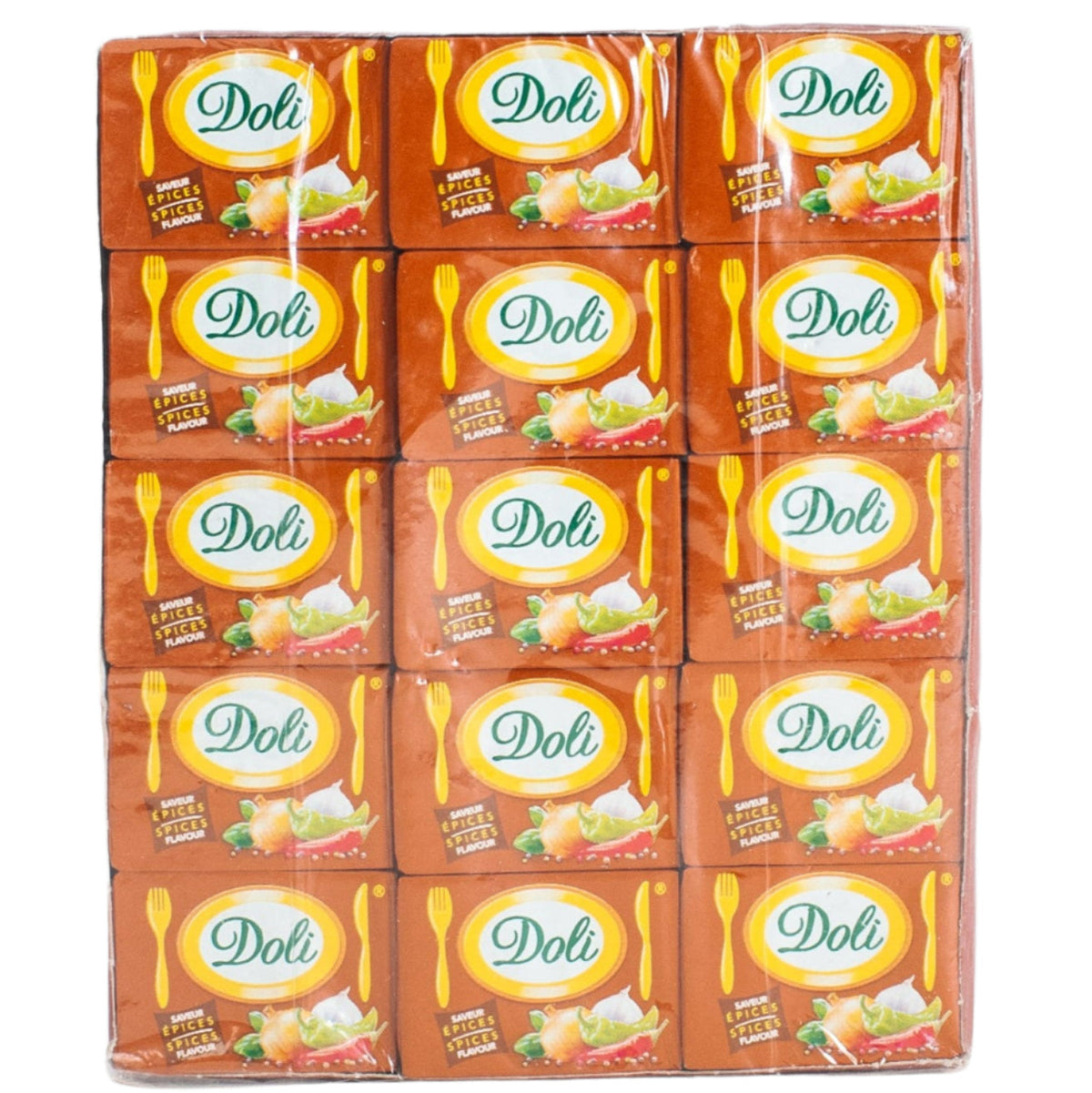
Our Doli seasoning cubes and Onga seasoning both work as general-purpose stock seasonings, and some brands offer a vegetable-based version specifically for households avoiding meat or seafood-derived stock bases. Checking the label for the specific flavor variant matters here, since "bouillon cube" as a category spans all of these different bases.
Bouillon Cubes vs. Spice Blends
Bouillon cubes are distinct from all-purpose spice blends like Egye Aware — cubes are primarily a savory stock base, while spice blends focus more on aromatic flavor. Many recipes use both together rather than choosing one over the other.
How Much to Use
Most recipes call for one or two cubes (or an equivalent measure of powder) per pot of stew or soup, dissolved directly into the cooking liquid early in the process. Because cubes are salty, taste before adding additional salt separately, since it's easy to over-season a dish once the cube's sodium is factored in.
Cube vs. Powder Format
Bouillon is sold both as solid cubes and as loose powder, and the choice between them is mostly a matter of convenience rather than a flavor difference — cubes are easy to portion by count (one cube per pot, for instance), while powder allows for more precise, smaller-increment adjustments if you want finer control over exactly how much you're adding.
Reading Labels for Sodium Content
Bouillon cubes and powders are generally high in sodium, since salt is a core part of what makes them work as a savory flavor base. If you're managing sodium intake, checking the label and adjusting how much additional salt you add elsewhere in a recipe is worth doing, since the cube's sodium contribution adds up quickly in a dish that also gets salted separately.
Stocking More Than One Type
Most households that cook West African food regularly keep more than one bouillon variety on hand — a chicken cube as the default, plus a shrimp or fish variety specifically for seafood dishes — rather than relying on a single all-purpose cube for every dish, since the flavor mismatch becomes more noticeable in seafood-forward recipes.
Choosing the Right One for Your Dish
As a general rule: use chicken bouillon as your default for most dishes, switch to shrimp or fish seasoning for seafood-forward dishes like light soup, and check specifically for a vegetable variant if you're cooking meat-free. Our Doli seasoning cubes guide covers one all-purpose option in more depth.
Frequently Asked Questions
What's the difference between chicken and shrimp bouillon?
Chicken bouillon is a general-purpose savory base, while shrimp bouillon adds a distinctly seafood-forward, briny depth suited to fish and seafood dishes.
Can bouillon cubes and spice blends be used together?
Yes — many recipes use both, since bouillon cubes provide a savory stock base while spice blends add aromatic complexity that a cube alone doesn't cover.
How much bouillon should I use per dish?
Most recipes call for one or two cubes (or an equivalent measure of powder) per pot, dissolved into the cooking liquid early in the process.
Is there a vegetable bouillon option for West African cooking?
Some brands offer a vegetable-based variant specifically for meat-free cooking — check the label, since it's not the default flavor for most brands.


