
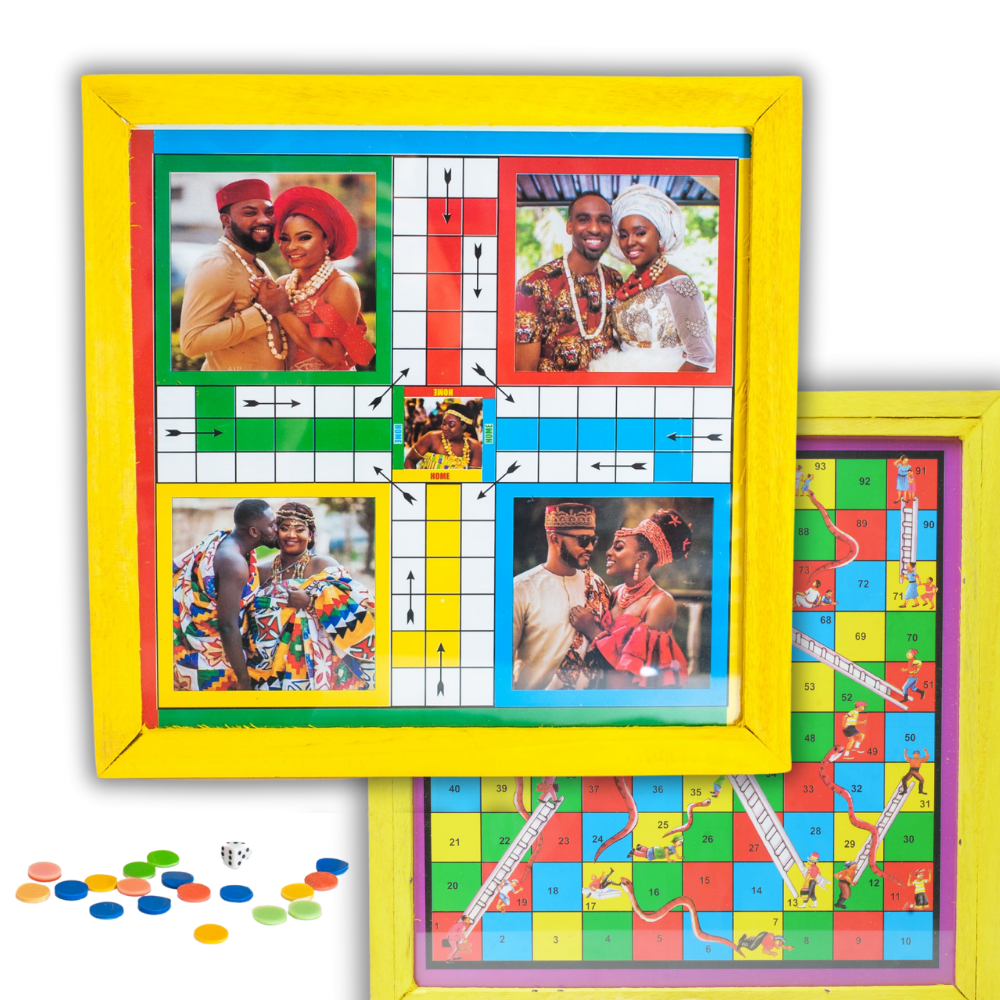
Ludo shows up at nearly every West African family gathering — a simple, colorful board game that's easy enough for kids but competitive enough to genuinely divide a family into rival factions by the end of a game night.
What You Need to Play
Ludo is played on a cross-shaped board divided into four colored home areas, with each player controlling four tokens of a single color, moved using die rolls. Our multicolor wooden two-sided Ludo board game is a family-sized set built for regular use rather than a flimsy travel version.
Basic Rules
Each player starts with all four tokens in their home base and must roll a 6 to move a token out onto the main track. From there, players take turns rolling the die and moving one token the corresponding number of spaces, aiming to move all four tokens around the board and into their home column before their opponents do.
Capturing Opponents' Tokens
Landing exactly on a square occupied by an opponent's token sends that token back to its home base, forcing the opponent to roll another 6 before re-entering play — this capturing mechanic is what makes Ludo genuinely strategic rather than pure luck, since players have to weigh aggressive moves against leaving their own tokens exposed.
Safe Zones
Most Ludo boards mark certain squares (often at the entry points and star-marked spots) as safe zones, where tokens can't be captured by opponents. Understanding which squares are safe changes how you plan moves — parking a token on a safe square can be a smart defensive pause rather than always pushing forward.
Tips for a Better Game
Rolling a 6 grants an extra turn in most rule variations, so prioritizing getting new tokens onto the board early (rather than only advancing one token repeatedly) usually gives more flexibility later in the game. Family variations on the exact rules are common — agreeing on house rules before starting (like whether landing on your own token stacks them, or exact re-entry requirements) avoids arguments mid-game.
Winning the Game
The first player to move all four of their tokens completely around the board and into their home column wins. Because getting all four tokens moving requires repeated 6 rolls to bring new tokens into play, games can occasionally run long if the dice aren't cooperating — house rules sometimes address this with a bonus turn after several consecutive non-6 rolls, though this isn't part of the standard rule set.
Ludo Across West Africa and Beyond
While Ludo has roots tracing back to an ancient Indian game, it's been adopted and embraced as a genuine family tradition across West Africa and many other regions, played casually at home gatherings as much as it's played anywhere else in the world. Its simple, portable board format is part of why it's traveled so widely and stayed popular across generations.
Why Ludo Is a Family Favorite
Ludo's combination of simple rules and real strategic depth makes it accessible across a wide age range, which is part of why it's a recurring fixture at West African family gatherings and holidays rather than a game that gets outgrown. Browse our full board games collection or wider games collection for more options to round out a family game night.
Teaching the Game to Younger Kids
Ludo's core mechanic — roll and move — is simple enough for young children to grasp quickly, even before they fully understand the strategic capturing element. Starting younger players with a simplified version (skipping strict safe-zone rules, for instance) and gradually introducing the full rule set as they get more comfortable is a common way families teach it across generations.
Frequently Asked Questions
How many players can play Ludo?
Ludo is typically played by 2 to 4 players, with each player controlling one colored set of four tokens.
What happens if you land on an opponent's token?
Landing exactly on a square occupied by an opponent's token sends that token back to its home base, forcing them to roll another 6 to re-enter play.
Do you need to roll a 6 to start?
Yes — players must roll a 6 to move a token out of their home base and onto the main track.
Are there safe squares in Ludo?
Yes — most boards mark certain squares, often at entry points and star-marked spots, as safe zones where tokens can't be captured.


