
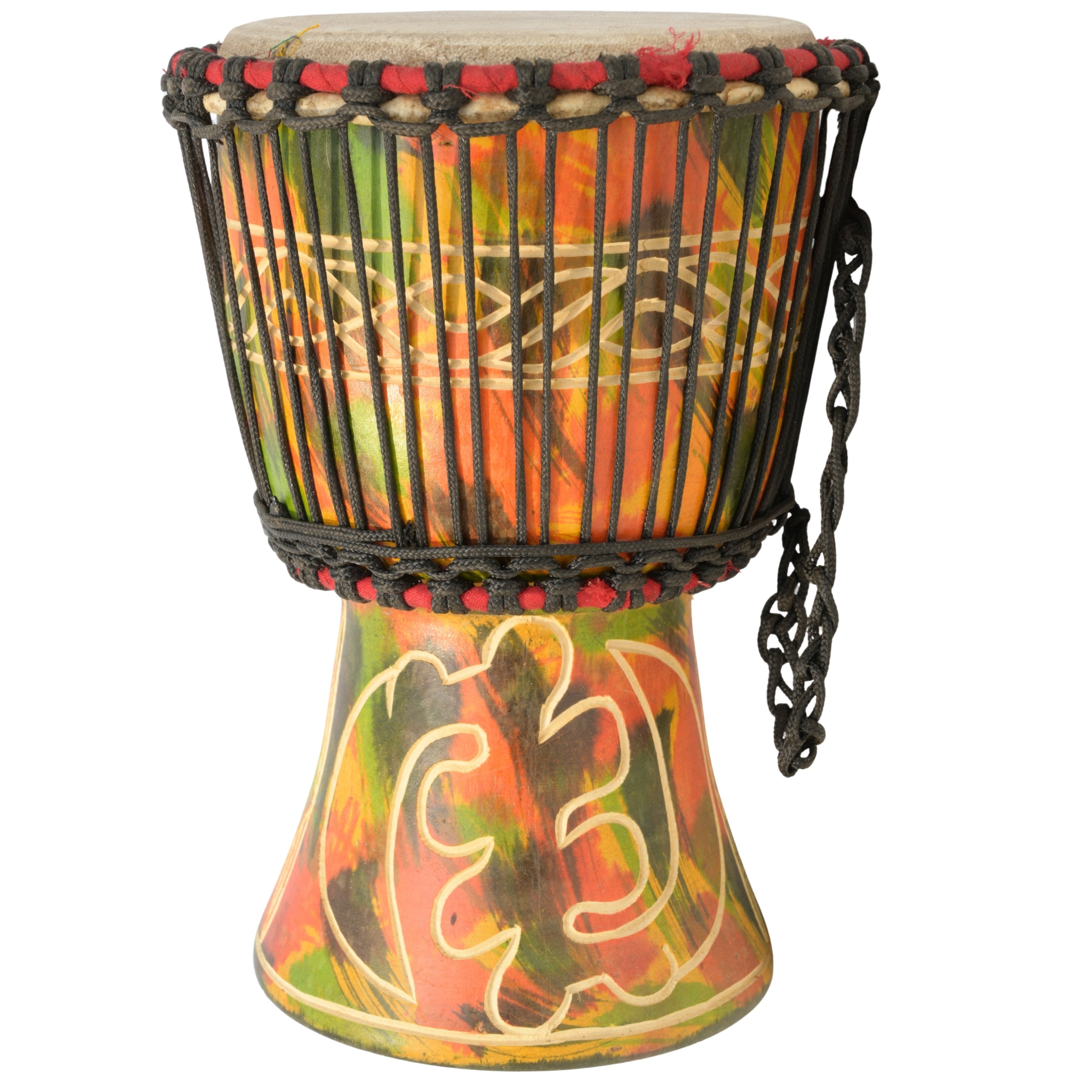
A fence protects what's inside it — and that's exactly the idea behind Eban, one of the more visually literal Adinkra symbols.
What Eban Means
Eban depicts a fence and symbolizes safety, security, and love — the protective boundary a family or home provides. It's a straightforward, grounded symbol: what's enclosed and protected is cared for.
A Symbol of Home and Family
Because of its connection to protection and enclosure, Eban is often associated with family life and the security a stable home provides — a fitting symbol for something meant to safeguard what matters most.
Where You'll Find It on Our Drums
Eban appears on our medium djembe, paired with Kramo Bone Amma Yeanhu Kramo Pa. See our guide to that symbol's meaning as well.
Frequently Asked Questions
What does the Eban symbol mean?
Eban depicts a fence and symbolizes safety, security, and love — representing the protective boundary a home or family provides.
Why is a fence used as a symbol of love?
A fence protects and encloses what matters, connecting the idea of security directly to care and love for what's being protected.
Which of your drums feature the Eban symbol?
Eban appears on our medium djembe drum, paired with the Kramo Bone Amma Yeanhu Kramo Pa symbol.


