
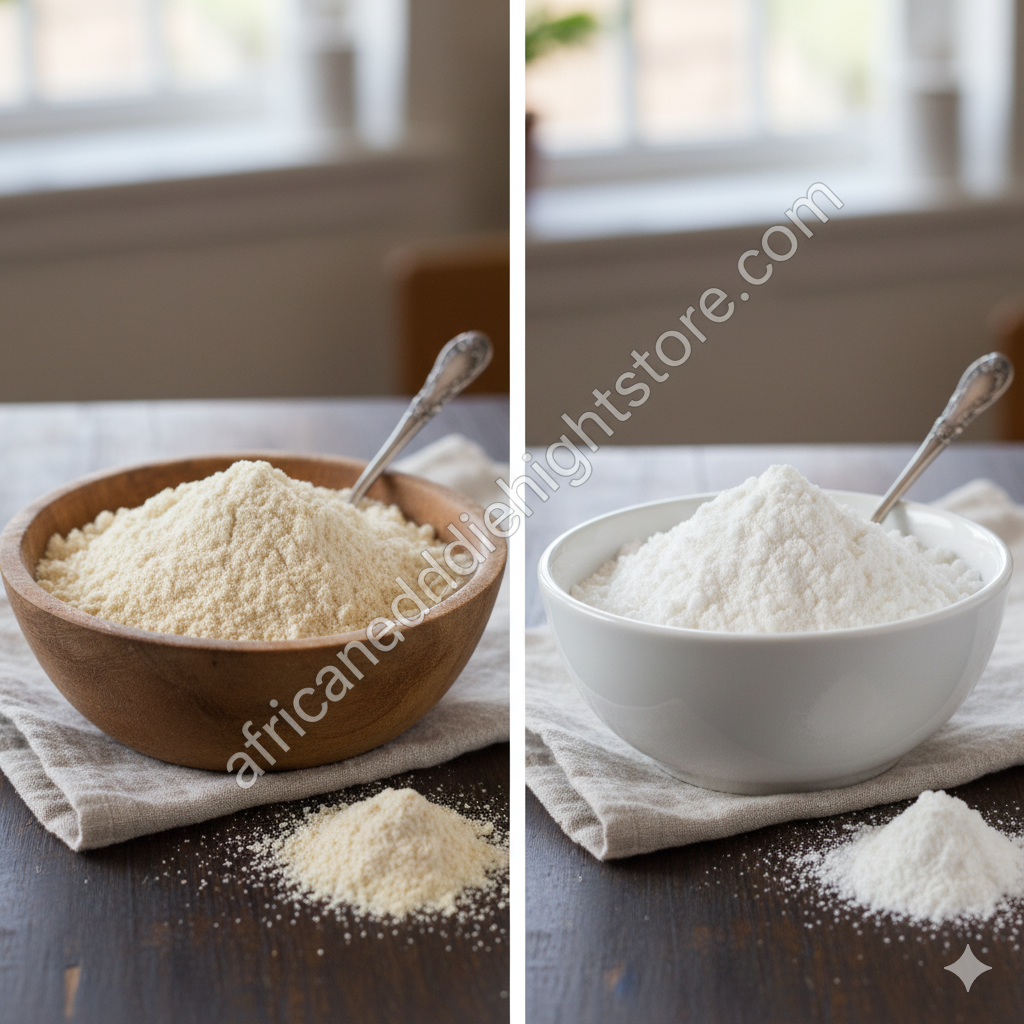
Cassava Flour vs Tapioca: What’s the Difference?
Short answer: Cassava flour and tapioca (starch) both come from the cassava root, but they’re very different ingredients. Cassava flour is whole-root, grainy, and works as a 1:1 grain-free flour substitute; tapioca is a mostly pure starch used for thickening and crisping. Read on to learn why each matters and when to use one over the other.
Buy authentic African Delight Cassava Flour now!
https://africandelightstore.com/products/nayama-natural-attieke
Buy Pure Cassava Flour — Shop Now
What are cassava flour and tapioca starch?
Cassava flour is made from the whole cassava root: peeled, dried, and milled into a fine powder. It contains fiber, some protein, and the root’s natural flavor and structure. Tapioca (also called tapioca starch or tapioca flour in some markets) is extracted starch — essentially the isolated carbohydrate portion of the root. Because of that processing difference, cassava flour vs tapioca behave very differently in recipes.
Related article: Complete Guide to Cassava Flour: Gluten-Free & Grain-Free Baking
Key differences at a glance
- Composition: Cassava flour = whole root (fiber + starch). Tapioca = nearly pure starch.
- Texture: Cassava yields more body and chew; tapioca gives stretch and glossy thickness.
- Uses: Cassava for baking (breads, pancakes), tapioca for thickening sauces, adding chew (boba), or crisping textures.
- Substitution: You cannot always swap 1:1. Cassava often replaces wheat in quantity-based recipes; tapioca is usually used in small percentages (10–30%) to modify texture.
Related article: Is Cassava Flour Healthy? Pros & Cons
Nutrition & carbs — practical differences
Both are relatively high in carbohydrates, but cassava flour retains more nutrients and fiber because it’s whole-root. When comparing cassava flour vs tapioca flour nutritionally, expect slightly more fiber and trace nutrients in cassava flour and nearly pure starch in tapioca. That difference affects satiety, glycemic response, and how each ingredient performs in gluten-free baking.
When to choose cassava flour
Choose cassava flour when you want a whole-food, grain-free flour for pancakes, quick breads, tortillas, or recipes that benefit from body and structure. It’s a top pick for Paleo baking and many grain-free recipes because it can replace wheat in volume-based recipes with fewer binders.
When to choose tapioca starch
Use tapioca when you need thickening power (soups, sauces, pie fillings), glossy shine, chew (bubble tea, some baked goods), or to improve crispness in frying. Tapioca is excellent as a minor ingredient to modify texture rather than as a primary flour.

Buy authentic African Delight Cassava Flour now!
https://africandelightstore.com/products/homefresh-banku-mix
Practical baking guide — swaps & ratios
Understanding tapioca vs cassava flour helps avoid gummy, dense, or crumbly outcomes. Use these rules of thumb:
- Replacing wheat with cassava flour: Start with a 1:1 swap but expect to increase liquids by ~10–20% and add an egg or binder for structure.
- Using tapioca as a texture booster: Add tapioca in small amounts (10–30% of total flour weight) to improve chewiness and crispness—not as a full replacement.
- Thickening with tapioca: Make a slurry (cold water + tapioca) and add near the end of cooking; it thickens quickly and gives a glossy finish.
Related article: Cassava Flour Safety: Lead, Oxalates, FODMAP
Common recipe examples
Cassava pancakes (simple)
1 cup cassava flour, 1 egg, 1 cup milk (or dairy-free), 1 tsp baking powder, pinch salt. Whisk, rest 10 minutes, cook low and slow. Yield: tender, grain-free pancakes with body.
Tapioca-thickened fruit filling
Mix 2 Tbsp tapioca starch with 2 Tbsp cold water, stir into hot fruit and sugar, cook 1–2 minutes until clear and glossy.
Texture troubleshooting
If a cassava flour bake is too dense: reduce cassava slightly, increase liquid, or add a light binder (egg or xanthan if allowed). If a recipe using tapioca is gummy: use less tapioca or finish with a short bake time to dry the surface.
Label reading — cassava flour vs tapioca on the shelf
On ingredient lists, “cassava flour” means whole-root powder. If a product lists “tapioca starch” or “tapioca flour”, it’s the isolated starch — very different in behavior. Some blends combine both for balanced texture; those are useful but check the intended use.
Which is better for you?
Neither is universally “better.” For whole-food, grain-free baking pick cassava flour; for thickening, crisping, or creating chew, pick tapioca. Many successful gluten-free bakers use a mix: cassava for structure + tapioca for lightness and stretch.
Quick reference: cassava flour vs tapioca
| Feature | Cassava Flour | Tapioca (Starch) |
|---|---|---|
| Processing | Whole-root milled | Starch extracted |
| Main use | Baking, 1:1 wheat substitute | Thickening, texture modifier |
| Texture effect | Body, chew | Gloss, stretch, crispness |
| Typical ratio | Main flour | Minor addition (10–30%) |
Conclusion — how to choose
When deciding between cassava flour vs tapioca, match the ingredient to the role in your recipe. Want a whole-food flour that can replace wheat? Go cassava. Need a glossy thickener or crisp-chewy texture? Reach for tapioca. And when in doubt, combine them: cassava for structure + a little tapioca for finishing texture often gives the best results.

Frequently Asked Questions
Is cassava flour the same as tapioca?
No. Both come from the cassava root, but cassava flour is the whole root (peeled, dried and milled) so it keeps fiber and structure, while tapioca is the extracted, nearly pure starch.
Can I substitute cassava flour for tapioca?
Not always 1:1. Cassava flour usually replaces wheat by quantity in baking, while tapioca is typically used in small amounts (about 10–30%) to add stretch, chew or glossy thickening.
Which is better for baking?
Cassava flour is better for grain-free baking like breads and pancakes because it adds body and chew. Tapioca is better for thickening sauces, adding chew (like boba), or crisping textures.


1 comment
Lucy Morgan
God is Good!
I promised God that I would share my testimony on this website. I had all the signs of STD Virus but I was not too sure as to which one. I did a lot of online research and scared myself straight for a whole week before going to see the nurse. She took one look at my genital part and first said that it could just be the anatomy of my body, then she said it looked like genital warts and that I May have herpes. I was devastated. She gave me some medicine for the herpes and some cream for the warts. I was also tested for every single STD including herpes. I went home and cried searching the web for all sorts of cures for herpes and awaiting my results. I saw a post whereby Dr. Kham cured Herpes and other diseases, I copied his contacts out and added him on WhatsApp. The next day my test result was ready and I confirmed Herpes positive. I told Dr. Kham about my health problems and he assured me of a cure. He prepared his herbal medicine and sent it to me. I took it for 14 days (2 weeks). Before the completion of the 14 days in which I completed the dose, The Blisters and Warts that were on my body were cleared. I went back for a check-up and I was told I’m free from the virus. Dr. Kham cures all types of diseases and viruses with the help of his herbal medicine. You can reach Dr. Kham via his email: dr.khamcaregiver@gmail.com or WhatsApp him on +2348159922297 and You can Also Visit his website; herbalistdrkhamcaregiver.simdif.com and his Facebook page; https://www.facebook.com/drkhamherbremedies/